The Complete Freeze Drying Manual

Just Freeze Drying

Everything Freeze Drying. Nothing Else.

by WeFreezeDryIt

Guides, food instructions, troubleshooting, equipment, storage, rehydration, experiments and practical tools for better freeze-drying results.

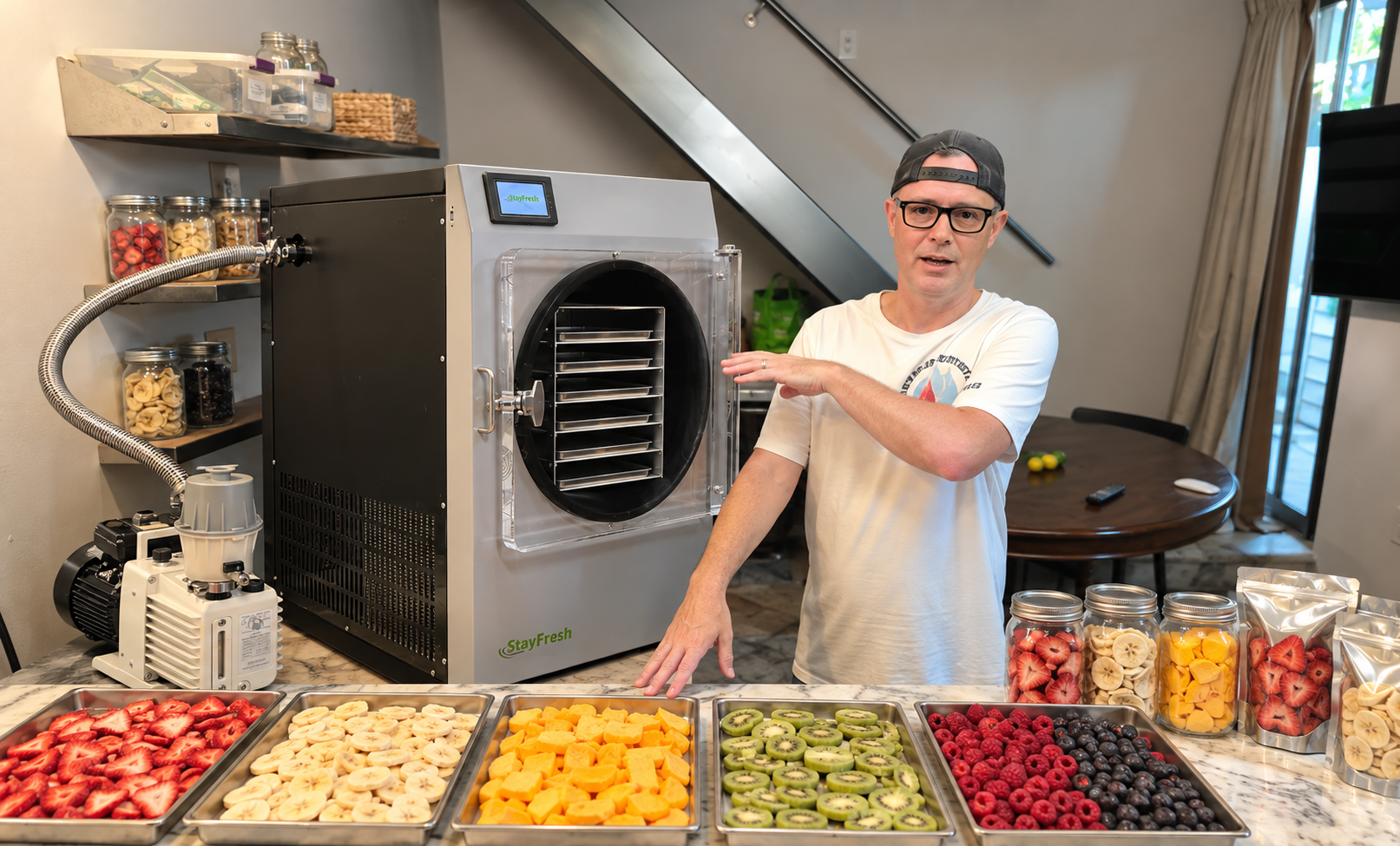
Fruit trays loaded into the WeFreezeDryIt freeze dryer in Coronado, Panama

Independent Freeze-Drying Education & Real-World Testing

Just Freeze Drying is an educational knowledge platform created by WeFreezeDryIt. We are not a freeze-dryer manufacturer. Our guides combine practical freeze-drying experience, documented real-world testing, manufacturer documentation, calculations, and reputable technical sources.

Free 2-minute quiz

Find your freeze-drying match

Answer a few quick questions and we'll point you in the right direction, from a small test run to commercial production.

Take the quiz to get pointed in the right direction, or contact me directly.

Start Here

Where do you want to begin?

Eight practical starting points, from your first food to the problems that come up later.

What Do You Need Help With?

Jump straight to the right place: check a food, fix a problem, learn, calculate or explore real tests.

Process

How Freeze Drying Works

Freeze drying removes water from food while it stays frozen. The cycle runs in four steps.

01

Freeze

The food is frozen solid.

02

Create a Vacuum

Air pressure inside the chamber is greatly reduced.

03

Remove the Ice

Under vacuum, frozen water turns directly from ice into vapor through sublimation.

04

Final Dry

Remaining moisture is removed before the food is packaged.

Reading Library

Learn before you start

Practical guides on freeze drying, built from the questions people ask us most.

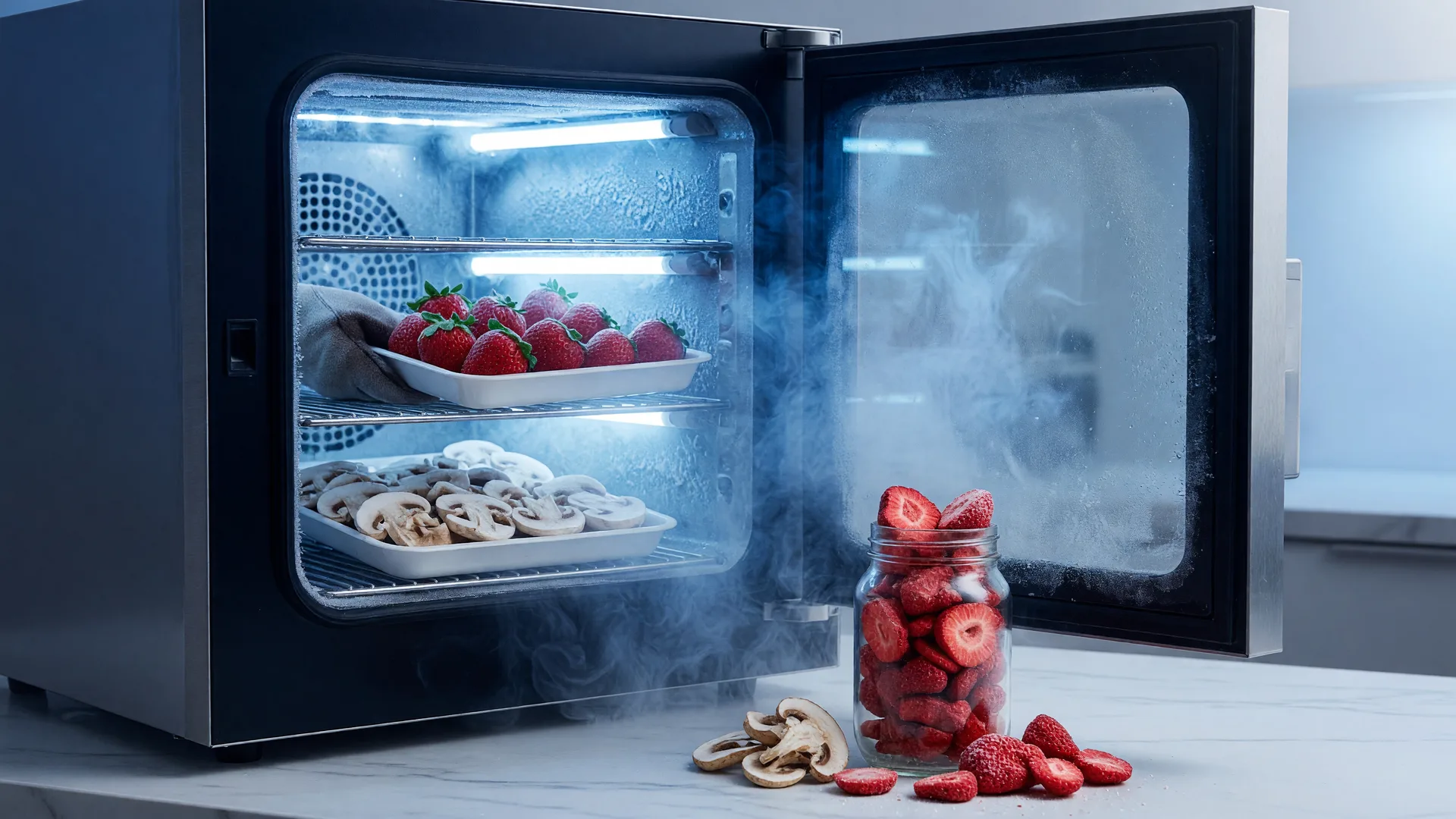
A modern freeze dryer with its glass door open, trays of strawberries inside and a jar of freeze-dried berries in front Learn

6 min read

What Is Freeze Drying, and How Does It Work?

Freeze drying removes the vast majority of the water while the food stays frozen, which is why it keeps so much texture and flavor; nutrient retention varies by food and nutrient.

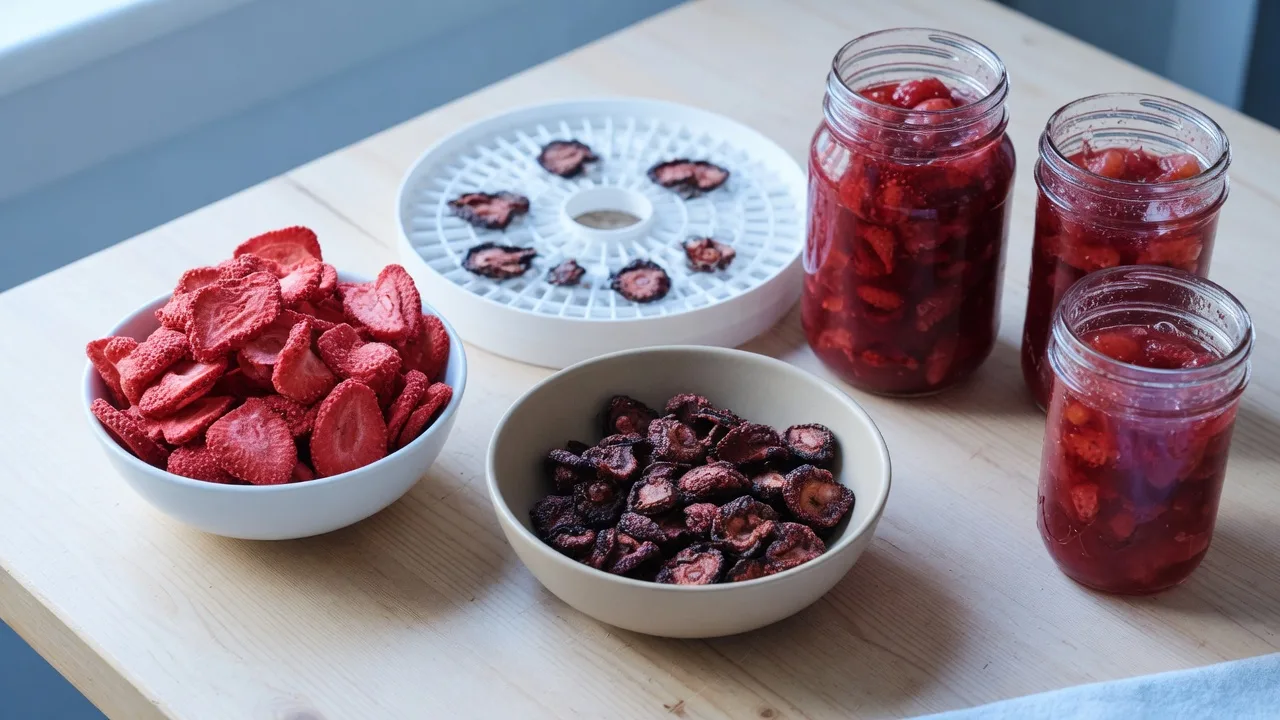
Bright puffy freeze-dried strawberry slices next to darker shriveled dehydrated fruit and jars of canned preserves Learn

6 min read

Why Freeze-Dried Food Is Better Than Other Preservation Methods

Canning cooks your food. Freezing stops time but needs power forever. Dehydrating saps color and nutrition. Freeze drying retains most nutrients, with fresh taste and texture.

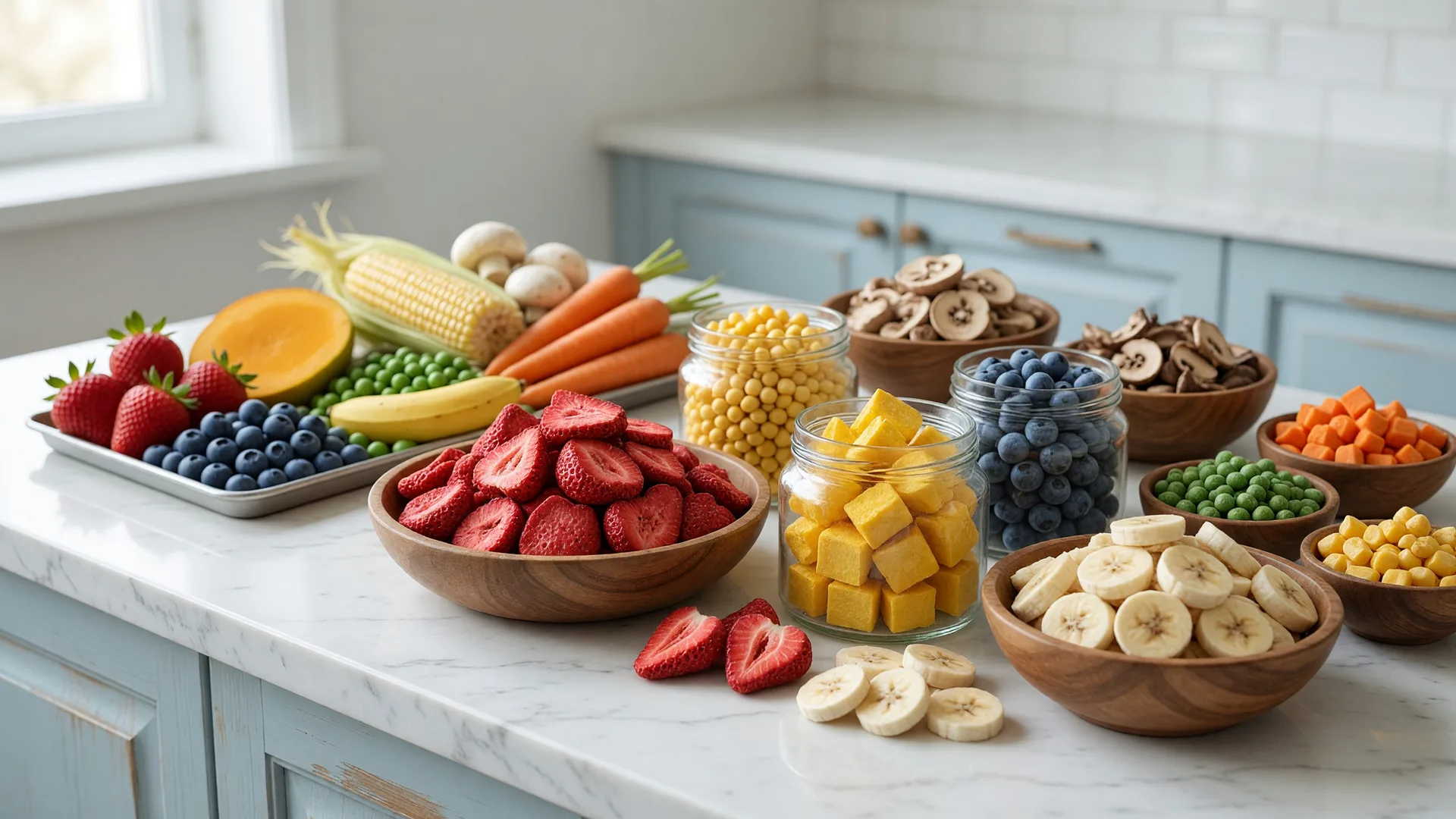
Colorful bowlsand jars of freeze-dried strawberries, mango, blueberries, corn, mushrooms, peas and carrots on a kitchen counter Learn

5 min read

The Best Foods to Freeze Dry

Fruits, sweet corn, mushrooms, peas, full meals, eggs and even candy freeze dry beautifully. High-fat foods like avocado do not: keep those fresh.

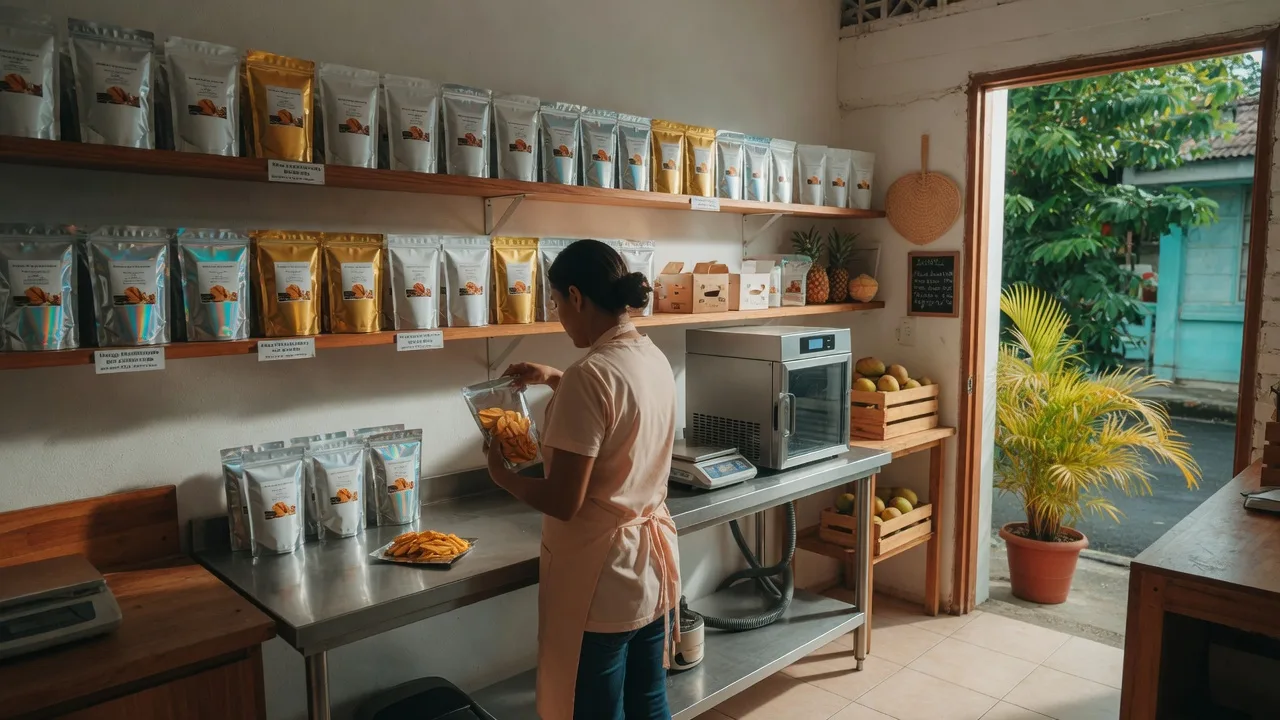
A small tropical bakery kitchen with shelves of freeze-dried Mylar pouches of mango and pineapple and a worker packing pouches For Business

6 min read

How Small Businesses in Panama Benefit from Freeze Drying

Turn seasonal fruit into a year-round product line, ship lighter, cut waste and test new ideas without buying a $2,500 machine.

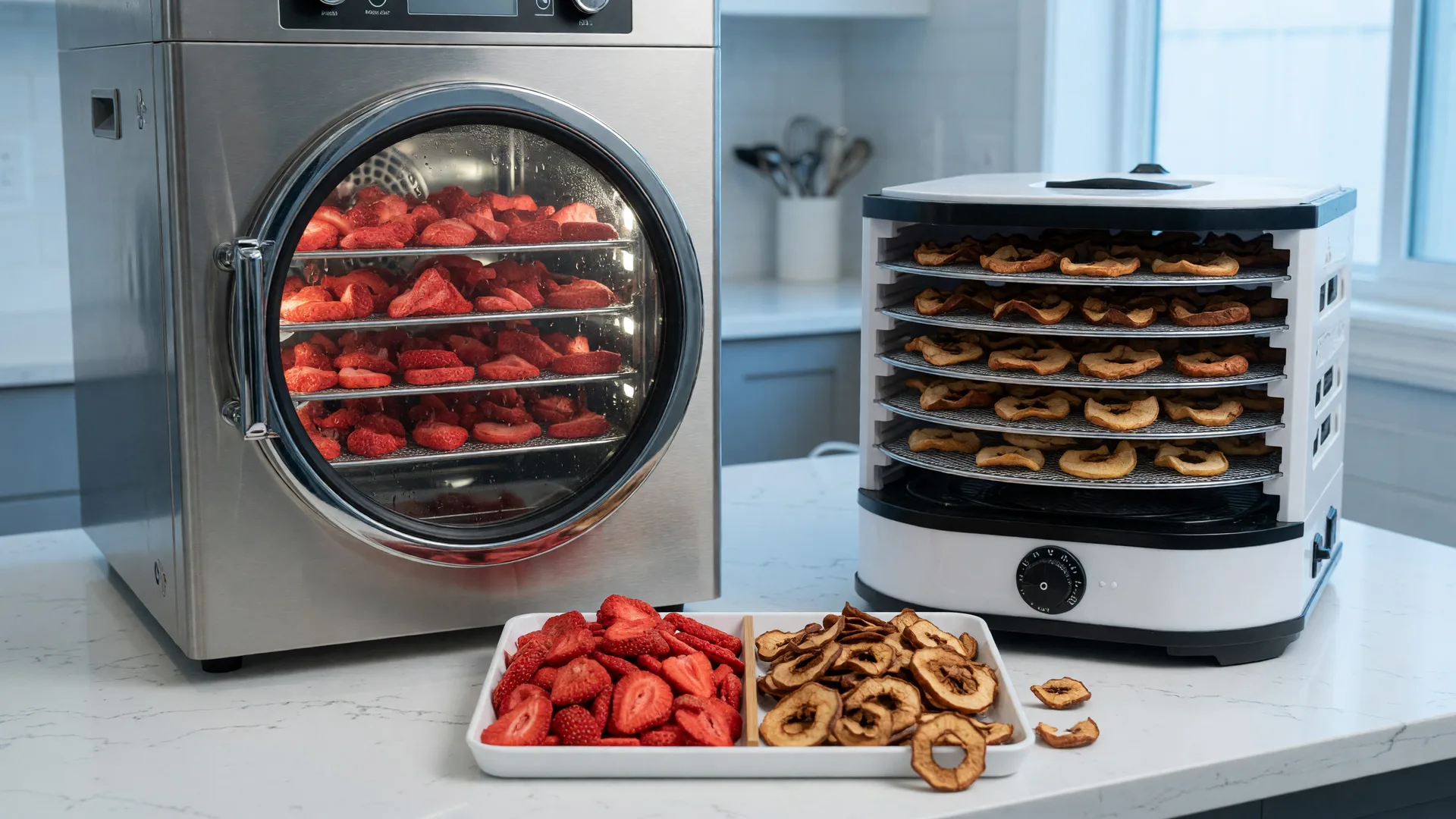
A stainless steel freeze dryerwith colorful puffy berries next to a countertop dehydratorwith darker shriveled apple chips Learn

5 min read

Freeze Drying vs. Dehydrating: What's the Difference?

Dehydrating cooks with heat around 140 degrees F. Freeze drying uses cold, along with vacuum instead. Different texture, different nutrients, different shelf life.

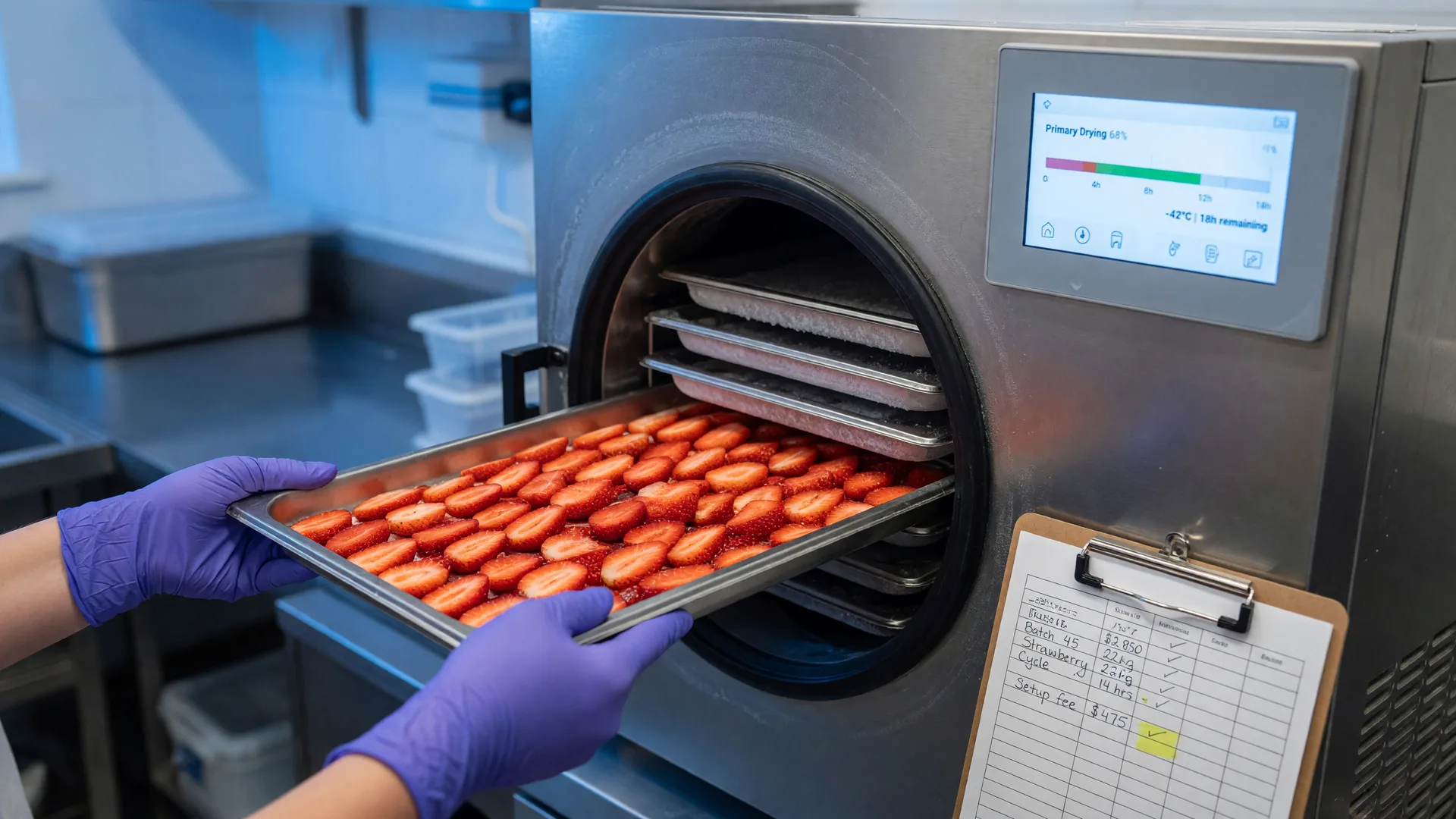
Gloved hands slidinga tray of sliced strawberries into a commercial freeze dryerwith a glowing digital control screen Learn

5 min read

How Much Does Professional Freeze Drying Cost?

We price by tray and batch, not flat per pound. A home machine runs $2,500 to $5,000 plus your time; cycles take 20 to 40 hours.

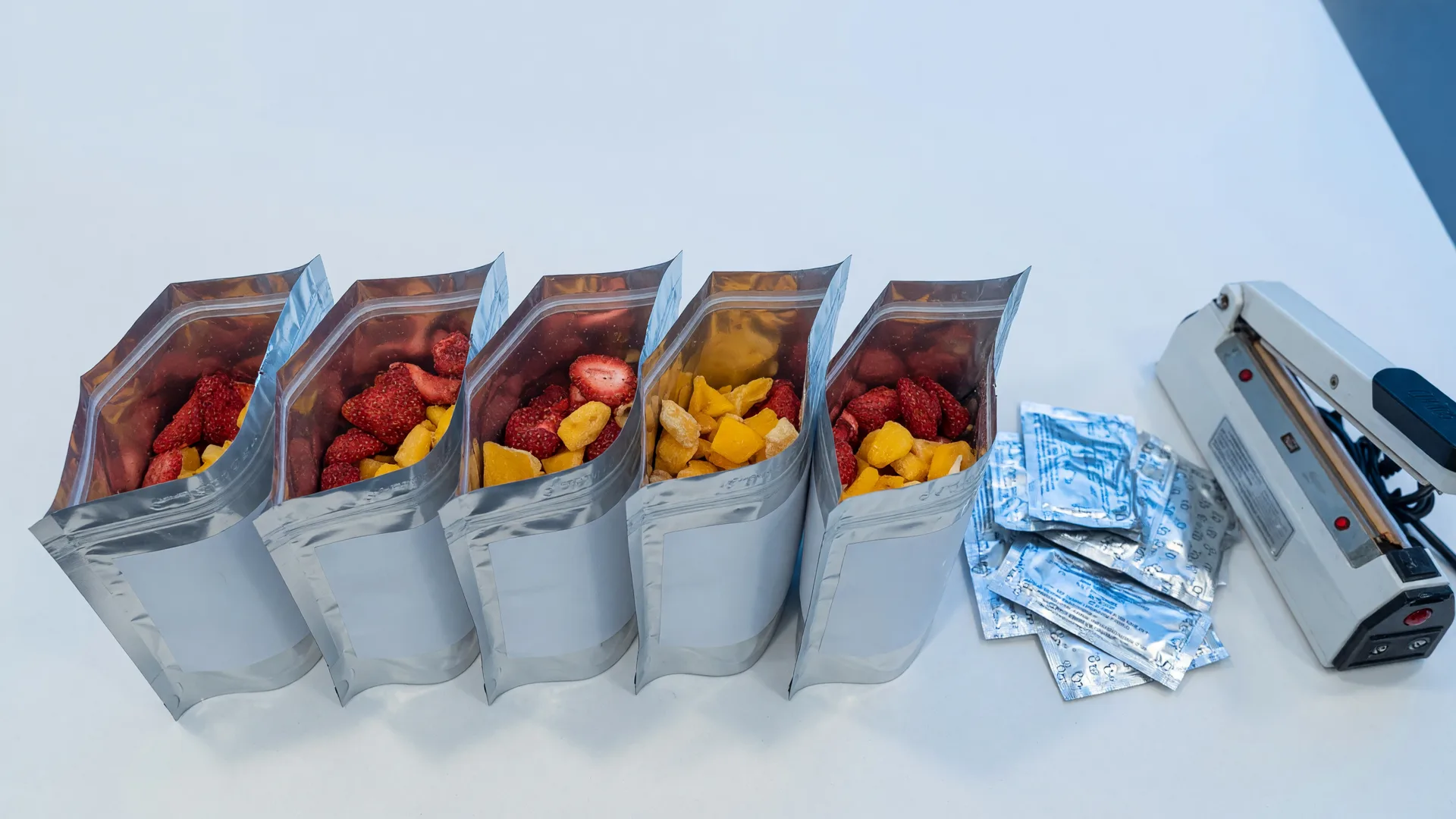
Mylar pouches filled with freeze-dried strawberriesand mango next to oxygen absorber sachets and a heat sealer For Business

6 min read

How Should Businesses Package Freeze-Dried Products for Retail?

Use high-barrier Mylar pouches of 3.5 to 7 mil, with oxygen absorbers. Oxygen, moisture, light, plus heat are the four enemies of freeze-dried food.

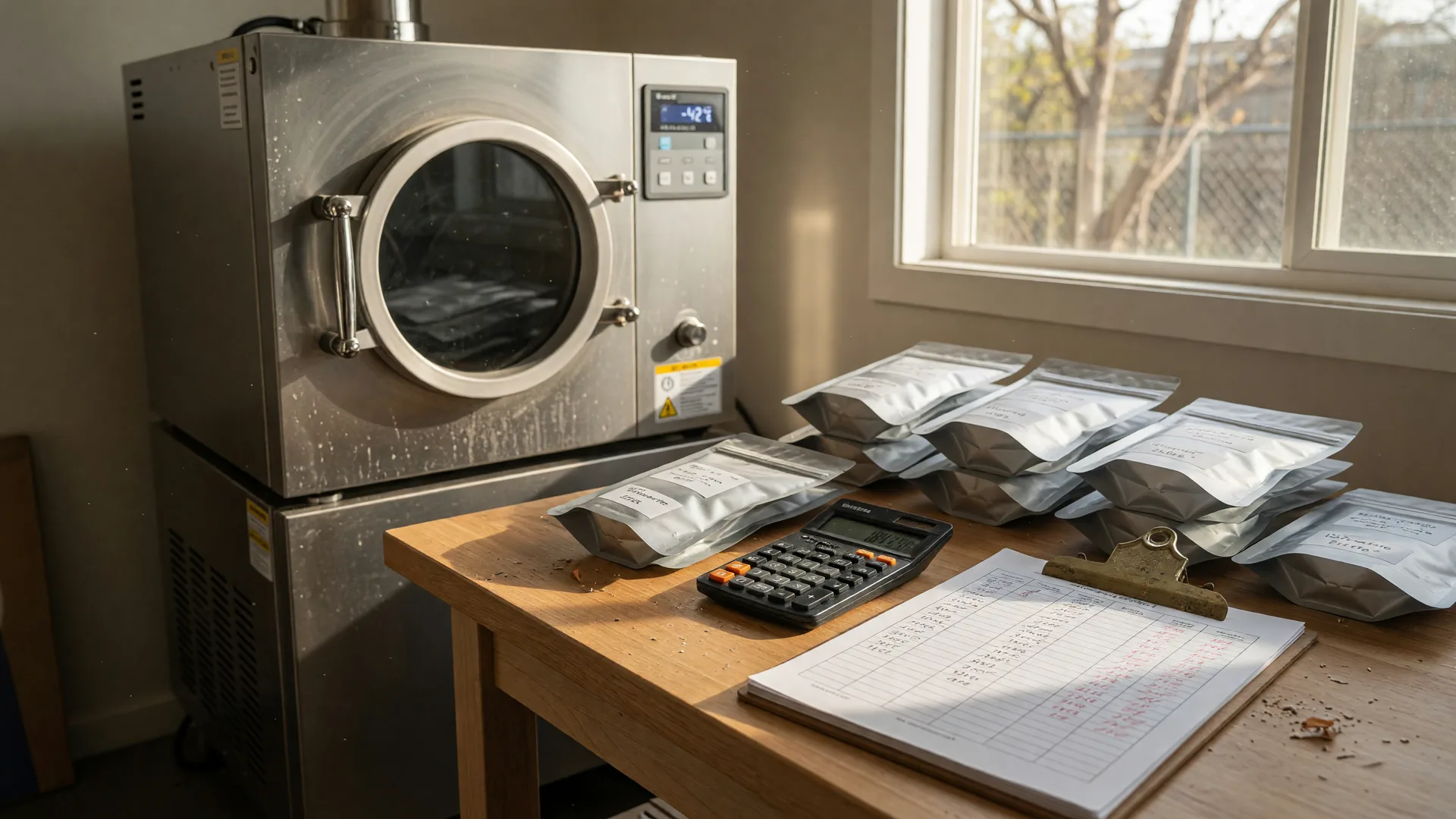
A business owner reviewing a cost spreadsheet next to a freeze dryerand boxes of packed Mylar pouches For Business

6 min read

Should Your Business Buy a Freeze Dryer or Use a Service?

As a rough business scenario, not a general expectation, steady high volume may let a machine pay back in about 1 to 3 years, depending on volume, pricing, utilization, labor, maintenance, packaging and sales assumptions. For low, seasonal or testing volumes, a service is usually the better fit.

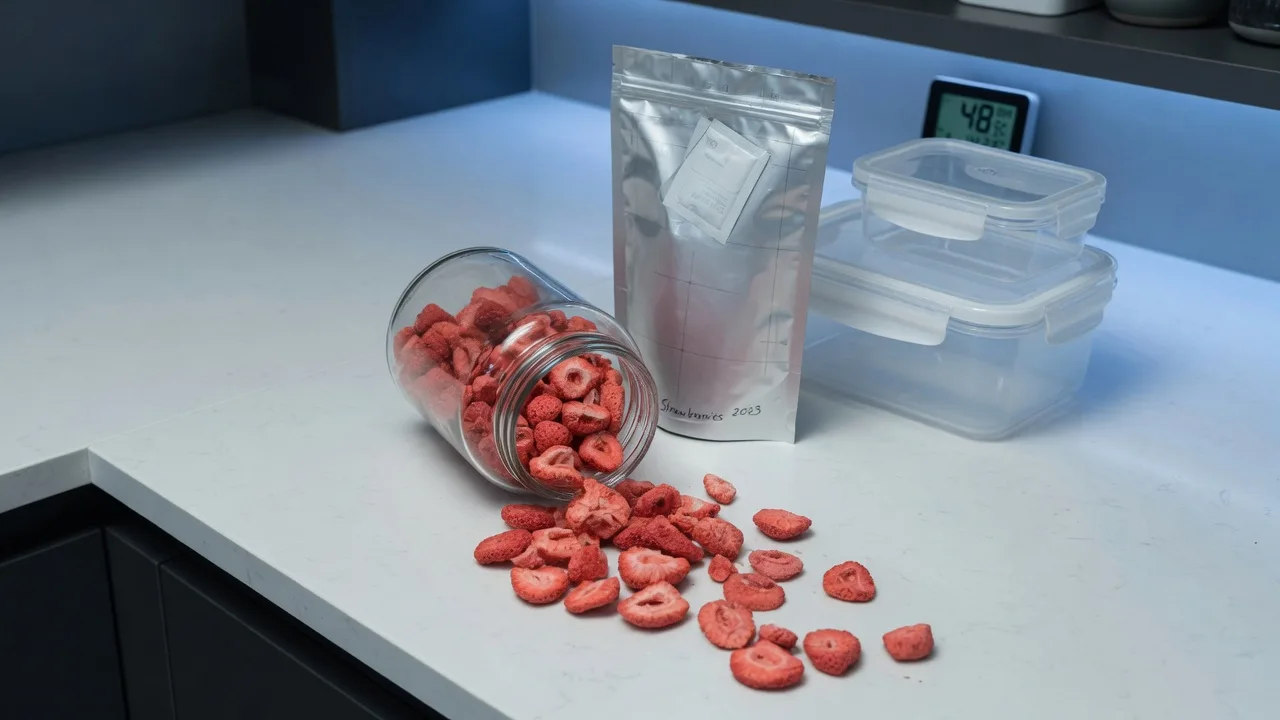
An open jar spilling crunchy freeze-dried strawberriesnext to a sealed Mylar pouchand a storage binin a cool dark pantry Learn

5 min read

How Long Does Freeze-Dried Food Really Last, and How to Store It Right?

How long freeze-dried food lasts depends on the food, its fat content, how dry it is, the packaging and storage conditions. Store it cool, dark and dry; after opening, a conservative practical habit is to use the food within a few weeks unless you reseal it, though how long it truly stays good depends on the food, packaging, residual moisture, humidity and handling.

Created by WeFreezeDryIt

Just Freeze Drying is an educational freeze-drying resource created by WeFreezeDryIt, combining practical freeze-drying experience with guides and tools designed to help people achieve better results.

News

Freeze Drying in the News

Recent headlines from the freeze-drying world, collected here.

Future Market Insights

Freeze-Drying Market to Reach USD 3.1 Billion by 2036 as Biologics Manufacturing Drives Demand

Read the article
Future Market Insights

Freeze-Dried Pet Food Market USD 3.5 Billion in 2026, Rising to USD 8.9 Billion by 2036

Read the article
Future Market Insights

Freeze Dried Fruits & Vegetables Market to Reach USD 212.0 Billion by 2036

Read the article
Petfood Processing

Freeze-Drying Frontier: Latest Advancements in Freeze-Drying Equipment

Read the article
Future Market Insights (via Morningstar)

Freeze-Dried Food Market Projected to Reach USD 63.3 Billion by 2036

Read the article