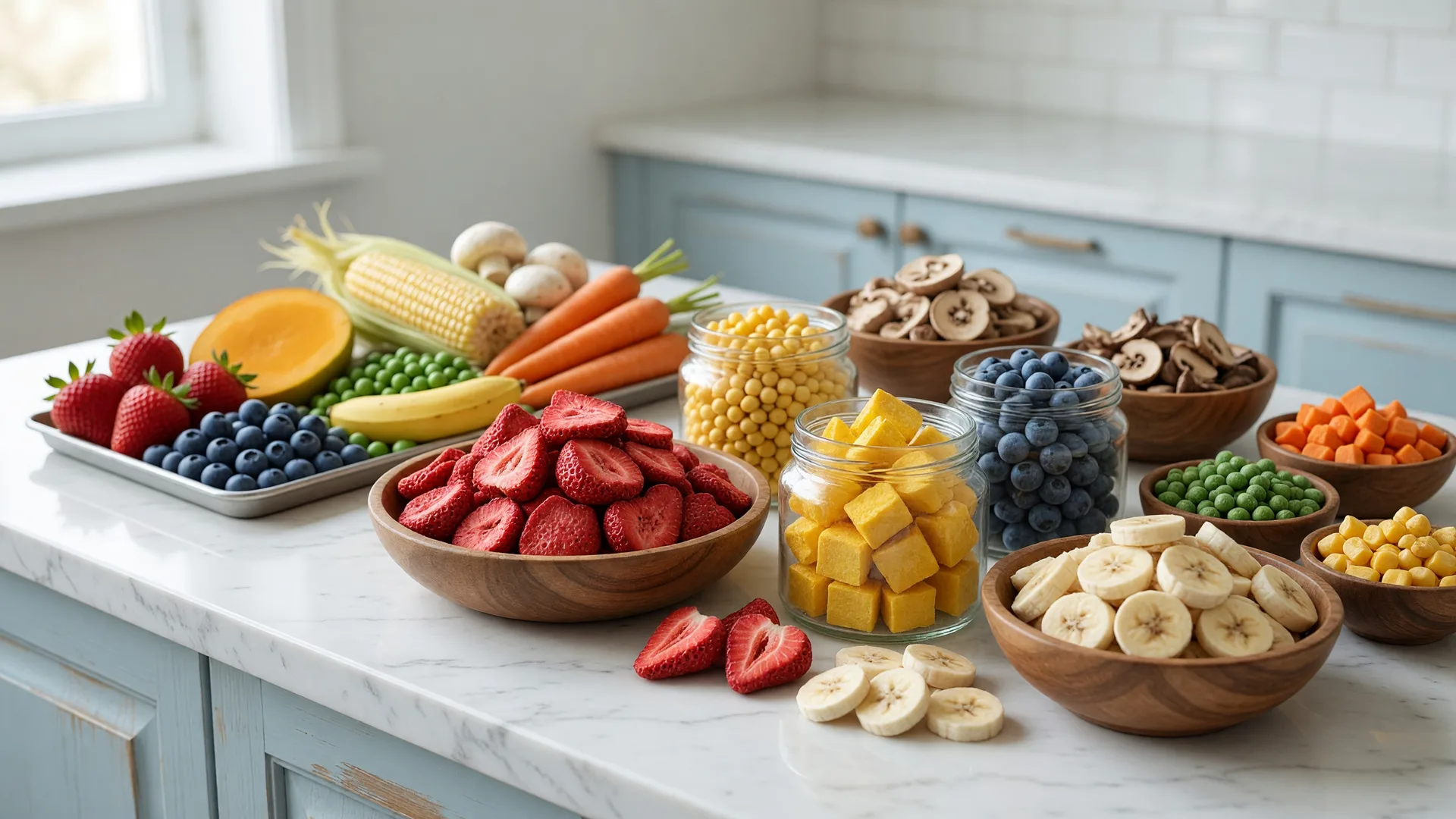
Most foods can be freeze-dried: fruits turn crisp, vegetables come back close to fresh, broths become instant stock, and cooked lean meats keep for a very long time. What freeze drying does is remove the vast majority of the water from the food when the process is completed properly, while the food stays frozen. That is what stops the bacteria, molds and enzymes that spoil food, which is why low-fat, high-water foods can store for extremely long periods, while higher-fat foods can still spoil as the fat that remains oxidizes and turns rancid. How long any freeze-dried food lasts depends on its composition, residual moisture, fat content, oxygen exposure, packaging, storage temperature, light and processing quality, not on the process alone.
Foods with firm cell structure, like mushrooms, berries, corn, soups and cooked root vegetables, rehydrate best and can be used almost like fresh. Delicate items such as papaya soften into something closer to a puree, and many fruits are simply best eaten dry as crisp snacks. Every entry below rates rehydration from Excellent to Not applicable, and flags what to expect.
Some foods cannot be usefully freeze-dried at all: oils, nut butters, mayonnaise and concentrated syrups contain little or no freezable water for the process to remove, so freeze drying provides little or no preservation benefit. Those sit in the Not recommended group, with the food-science reason spelled out.
A note on safety: freeze drying is a preservation process, not sterilization. It is not a substitute for proper food handling, cooking or sanitation. Raw meat, poultry and seafood require proper food-safety handling, which is why the animal products in this guide are cooked before drying.
123 foods, honestly rated
How the ratings work
Four honest categories
Excellent
Freeze-dries beautifully
Low-fat, high-water foods that come out crisp, keep well, and rehydrate reliably. The best candidates for long-term storage.
Yes with conditions
Good with the right prep
These foods freeze dry well once you handle the sticky, starchy, oily or high-moisture part of the prep first.
Shorter shelf life
Dries, but does not keep as long
These foods can be freeze-dried, but the fat that remains can oxidize and turn rancid, so plan shorter-term storage.
Not recommended
Keep these fresh
Oils, nut butters, emulsions and concentrated syrups have little or no freezable water, so freeze drying provides little or no benefit.
Related reading: our Best Foods to Freeze Dry guide on the homepage covers the everyday favorites; this page ranks 123 foods in detail, including Spanish names for the tropical ingredients we see most in Panama.
Browse
Find any food
Classification
Category
Showing 123 of 123 foods
No foods match your filters.
Try a different search term or clear the filters.
The list
The 123-food guide
Each entry opens with the direct answer, then the prep, the dried result, rehydration, and the honest shelf-life picture. Jump straight to any food with its name anchor, like #guava.
Guava
Excellent
Yes, guava freeze-dries beautifully and produces a light, intensely flavored result.
Preparation
Slice ripe guava into thin rounds; the skin and tiny seeds handle the process fine, so no peeling is needed. Firm fruit slices more cleanly than overripe fruit.
Freeze-Dried Result
Crisp, fragrant rounds that keep the pink color and punchy tropical aroma.
Rehydration
Good. Pieces soften quickly in warm water and crush into a sweet-tart paste for smoothies and sauces.
Shelf-Life Consideration
Guava is low in fat, so it is an excellent longer-term pantry candidate when sealed well and kept cool, dark and dry.
Best Uses
Snacking, cereal toppings, smoothie add-ins, yogurt mix-ins and a natural pink powder for baking.
Passion fruit (Maracuya)
Excellent
Yes, passion fruit freeze-dries well, and the pulp keeps its intense tart aroma.
Preparation
Cut the fruit open and spoon the pulp with seeds straight onto the tray; spread it thin so it dries evenly. No straining needed.
Freeze-Dried Result
A papery, crunchy sheet of pulp and seeds that shatters easily and tastes strongly of passion fruit.
Rehydration
Good. Stirred into water it loosens back into a seedy, tangy sauce; the seeds stay crunchy.
Shelf-Life Consideration
Low in fat with high acidity, passion fruit suits longer-term storage when moisture and oxygen are kept out.
Best Uses
Dessert toppers, smoothies, sauces, marinades and a vivid garnish that keeps for months.
Soursop (Guanabana)
Excellent
Yes, soursop freeze-dries well once the flesh is handled correctly.
Preparation
Scoop out the creamy pulp and remove the large black seeds; the stringy flesh dries best pressed into thin mounds or pureed first.
Freeze-Dried Result
A light, cottony, tangy-sweet sheet that dissolves on the tongue.
Rehydration
Good. Crumbled into water it becomes a soft, custard-like puree close to fresh soursop.
Shelf-Life Consideration
Naturally low in fat, soursop is suited to longer-term storage when sealed against moisture.
Best Uses
Smoothies, ice cream flavoring, beverages and a tropical powder for baking.
Rambutan (Mamon Chino)
Excellent
Yes, rambutan freeze-dries well and turns into a juicy-crisp, floral snack.
Preparation
Peel off the spiky shell, remove the seed and freeze dry the translucent flesh whole or in halves.
Freeze-Dried Result
Puffy, lightly crunchy pieces with a sweet, lychee-like taste.
Rehydration
Good. Pieces soften in water and nearly return to their original jelly-like texture.
Shelf-Life Consideration
A low-fat, medium-sugar fruit, so it keeps well for longer-term storage when packaged properly.
Best Uses
Snacks, fruit salads after rehydration, desserts and tropical gift packs.
Mangosteen
Excellent
Yes, mangosteen freeze-dries well, though the segments need a little care.
Preparation
Open the shell, lift out the white segments and remove any clinging rind, which turns bitter when dried.
Freeze-Dried Result
Soft-crisp, creamy-white morsels with the fruit's signature sweet-and-tart balance.
Rehydration
Good. Segments soften back toward their original juicy texture in a few minutes.
Shelf-Life Consideration
Low in fat and moderate in sugar, mangosteen suits longer-term storage when kept airtight.
Best Uses
Luxury snacks, desserts, smoothie additions and powders.
Starfruit (Carambola)
Excellent
Yes, starfruit freeze-dries beautifully and keeps its star shape.
Preparation
Wash, trim the ridges and slice into star rounds about half a centimeter thick; no peeling needed.
Freeze-Dried Result
Crisp, golden stars with a mildly tart, citrusy flavor.
Rehydration
Good. Stars soften quickly and can return to a salad or drink with a little soak.
Shelf-Life Consideration
Low in fat and fairly watery, it is a fine longer-term candidate when sealed well.
Best Uses
Garnish, snacks, drinks, fruit teas and decorative baking chips.
Papaya
Excellent
Yes, papaya freeze-dries well and comes back sweet and mildly tropical.
Preparation
Peel, seed and slice firm papaya into chunks or wedges; ripe but still firm fruit holds its shape best.
Freeze-Dried Result
Crisp, chewy-sweet pieces that stay bright orange.
Rehydration
Fair. Pieces soften in water but turn mushy rather than mimicking raw papaya, so most people eat them dry or blend them.
Shelf-Life Consideration
Low in fat, papaya is a strong longer-term pantry candidate when packaged correctly.
Best Uses
Snacks, smoothie boosters, cereal toppings and baby-friendly puree powder.
Mamey
Excellent
Yes, mamey freeze-dries well, and the rich orange flesh keeps its sweetness.
Preparation
Halve, pit and scoop the dense flesh, then puree or slice it thin before spreading on trays.
Freeze-Dried Result
A sweet, crumbly or lightly crisp sheet with a pumpkin-like depth.
Rehydration
Good. Blended with water it returns to a thick, smooth puree for shakes and desserts.
Shelf-Life Consideration
Low in fat with good sugar content, mamey stores well long term when sealed against moisture.
Best Uses
Smoothies, milkshakes, baby food, baking and tropical desserts.
Nance
Excellent
Yes, nance freeze-dries without trouble once the berries are clean.
Preparation
Rinse whole berries and freeze dry them as-is; the small white seed inside dries along with the fruit.
Freeze-Dried Result
Tiny, crisp, tart-sweet berries with a strong fruity aroma.
Rehydration
Good. They soften in water and pop like cooked fruit in sauces.
Shelf-Life Consideration
Low in fat with good acidity, nance keeps well for longer-term storage when sealed.
Best Uses
Snacks, trail mixes, sauces and a colorful baking garnish.
Acerola
Excellent
Yes, acerola freeze-dries well and is remarkably easy in small batches.
Preparation
Rinse, destem and spread whole berries in a single layer; no cutting needed.
Freeze-Dried Result
Small, crunchy, intensely sour berries that keep their bright red color.
Rehydration
Fair. They soften in water but stay tart, and are usually eaten dry or ground instead.
Shelf-Life Consideration
Very low in fat, acerola is an excellent longer-term option when fully sealed.
Best Uses
Vitamin C powder, smoothie boosts, snacks and natural food coloring.
Golden berries
Excellent
Yes, golden berries freeze-dry beautifully and pop like candy.
Preparation
Remove the papery husk, rinse and dry whole; leave a little space between berries so they do not fuse together.
Freeze-Dried Result
Plump, crunchy, sweet-tart orbs with a honeyed flavor.
Rehydration
Good. They soften in minutes and nearly return to raw texture.
Shelf-Life Consideration
Low in fat, golden berries are a solid longer-term storage fruit when sealed.
Best Uses
Snacks, cakes, granola, salads and dessert plating.
Lychee
Excellent
Yes, lychee freeze-dries well and captures its floral sweetness.
Preparation
Peel, pit and halve the translucent flesh; pat pieces dry so they do not freeze into one block.
Freeze-Dried Result
Crisp, pale pieces with a fragrant, rosy flavor.
Rehydration
Excellent. Halves soften quickly and come very close to fresh lychee.
Shelf-Life Consideration
Low in fat, lychee suits longer-term storage when sealed against moisture.
Best Uses
Snacks, desserts, cocktails, sorbets and fruit salads.
Prickly pear
Excellent
Yes, prickly pear freeze-dries well, with a little care around its seeds.
Preparation
Slice off the ends, peel or scoop the flesh and remove the large seeds; the juicy pulp dries fastest pressed thin or pureed.
Freeze-Dried Result
A delicate, crunchy sheet in vivid magenta with a mild melon-like sweetness.
Rehydration
Good. Stirred with water it forms a smooth, syrup-like puree for drinks.
Shelf-Life Consideration
Very low in fat, prickly pear is an excellent longer-term candidate when sealed.
Best Uses
Drinks, smoothies, syrups, natural coloring and powders.
Pomegranate arils
Excellent
Yes, pomegranate arils freeze-dry beautifully into juicy little crisps.
Preparation
Pop out the arils, spread them in a single layer without touching, and freeze dry directly.
Freeze-Dried Result
Crunchy, tart-sweet ruby pearls that burst rather than soften.
Rehydration
Fair. They turn soft and slightly pulpy in water but lose their pop, so most people eat them dry.
Shelf-Life Consideration
Low in fat with good acidity, arils store well long term when sealed from moisture.
Best Uses
Snacks, salads, granola, baking, cheesecake and holiday dishes.
Cranberries
Excellent
Yes, cranberries freeze-dry well, and tart whole berries dry nicely without added sugar.
Preparation
Rinse, sort and freeze dry whole or halved; no blanching needed.
Freeze-Dried Result
Light, crunchy berries with a sharp, clean tartness.
Rehydration
Good. They soften quickly and work like plumped dried cranberries in cooking.
Shelf-Life Consideration
Very low in fat and high in acid, cranberries are a strong longer-term pantry food.
Best Uses
Snacks, salads, sauces, baking and trail mix.
Gooseberries
Excellent
Yes, gooseberries freeze-dry well and keep their sharp flavor.
Preparation
Top and tail the berries, rinse and spread them in a single layer.
Freeze-Dried Result
Crisp, dimpled berries with a bright, tart taste.
Rehydration
Good. They soften in water and cook into compotes and sauces.
Shelf-Life Consideration
Low in fat, gooseberries keep well for longer-term storage when sealed.
Best Uses
Snacks, jams, sauces, pies and fruit powders.
Mulberries
Excellent
Yes, mulberries freeze-dry beautifully and become delicate, crunchy threads.
Preparation
Rinse gently and freeze dry the berries whole; handle them carefully because they are soft.
Freeze-Dried Result
Very light, crisp berries with a deep, sweet flavor.
Rehydration
Good. Restored in water they are soft and jammy, good for sauces and baking.
Shelf-Life Consideration
Low in fat, mulberries belong in longer-term storage when fully sealed.
Best Uses
Snacks, cereals, baking, smoothies and syrups.
Black currants
Excellent
Yes, black currants freeze-dry well into intense, tangy pearls.
Preparation
Rinse, pull off the stems and dry them whole in a single layer.
Freeze-Dried Result
Crunchy, fragrant berries with concentrated dark fruit flavor.
Rehydration
Good. They soften quickly and make rich sauces and fillings.
Shelf-Life Consideration
Low in fat and high in acid, black currants store well long term when sealed.
Best Uses
Snacks, puddings, sauces, juices and baking.
Red currants
Excellent
Yes, red currants freeze-dry well and keep their jewel-like look.
Preparation
Rinse and strip the berries from their stems; dry them whole.
Freeze-Dried Result
Tiny, crisp, tart berries that add bright color and pop.
Rehydration
Good. Softened in water they release juice for coulis and sauces.
Shelf-Life Consideration
Very low in fat, red currants suit longer-term storage when sealed properly.
Best Uses
Desserts, preserves, sauces and plating garnish.
Rhubarb
Excellent
Yes, rhubarb freeze-dries well, though the tart stalks turn especially crisp.
Preparation
Trim the leaves (they are not for eating), wash the stalks and slice into small pieces.
Freeze-Dried Result
Light, crunchy, sharply tart shards that keep the pink color.
Rehydration
Fair. Pieces soften to a stringy mush in water; they are better crumbled into batters or cooked dishes.
Shelf-Life Consideration
Very low in fat, rhubarb is a fine longer-term option when sealed.
Best Uses
Baking, crumbles, sauces, jams and pie fillings.
Pumpkin puree
Excellent
Yes, pumpkin puree freeze-dries well into a sweet, powdery sheet.
Preparation
Cook and puree pumpkin, then spread the puree thinly and evenly on tray liners.
Freeze-Dried Result
A brittle, matte sheet that crumbles into fine orange powder.
Rehydration
Excellent. Whisked with hot water it returns to smooth, thick pumpkin puree.
Shelf-Life Consideration
Pumpkin is low in fat, so it is an excellent longer-term pantry food when sealed.
Best Uses
Soups, pies, baby food, baking, smoothies and emergency meals.
Butternut squash
Excellent
Yes, butternut squash freeze-dries well once it is cooked and pureed or diced.
Preparation
Peel, seed, roast and puree, or dice cooked squash into small cubes before freezing.
Freeze-Dried Result
Sweet, airy cubes or a clean orange powder.
Rehydration
Excellent. Cubes and powder both come back close to freshly cooked squash.
Shelf-Life Consideration
Low in fat, butternut squash is a strong longer-term storage vegetable.
Best Uses
Soups, curries, pasta, baby food and camping meals.
Okra
Excellent
Yes, okra freeze-dries well, and it loses its sticky quality in the process.
Preparation
Wash, slice into rounds and freeze dry; no blanching is required.
Freeze-Dried Result
Crunchy green coins with a mild flavor and none of the sliminess.
Rehydration
Good. Rounds soften in soups and stews within a minute.
Shelf-Life Consideration
Low in fat, okra keeps well for longer-term storage when sealed.
Best Uses
Soups, stews, gumbo, snacks and stir-fries.
Brussels sprouts
Excellent
Yes, Brussels sprouts freeze-dry well when cut so they dry evenly.
Preparation
Trim the base, halve or quarter larger sprouts and freeze dry them directly.
Freeze-Dried Result
Crunchy, nutty pieces that keep their green color.
Rehydration
Good. They soften quickly and crisp up again when roasted or pan-fried.
Shelf-Life Consideration
Very low in fat, Brussels sprouts suit longer-term storage when sealed.
Best Uses
Roasted sides, soups, sheet-pan meals and camp cooking.
Artichoke hearts
Excellent
Yes, artichoke hearts freeze-dry well once they are prepped.
Preparation
Cook or use jarred hearts, drain well and pat dry, then quarter and freeze dry.
Freeze-Dried Result
Crisp-soft pieces with an earthy, savory flavor.
Rehydration
Good. Hearts soften in warm water and return to a tender texture for dips and pastas.
Shelf-Life Consideration
Low in fat, artichoke hearts store well for longer-term use when sealed.
Best Uses
Dips, pizza, pasta, antipasto and salads.
Jalapeno peppers
Excellent
Yes, jalapenos freeze-dry well into crisp, spicy coins.
Preparation
Wash, slice into rings with seeds in or out and spread them out; work in a ventilated area.
Freeze-Dried Result
Light, crunchy rings with the fresh green kick intact.
Rehydration
Good. Rings soften quickly and return heat to salsas, eggs and soups.
Shelf-Life Consideration
Very low in fat, jalapenos are a reliable longer-term pantry item when sealed.
Best Uses
Salsas, eggs, chili, pizza toppings and snacks.
Habanero peppers
Excellent
Yes, habaneros freeze-dry well, and the heat survives fully.
Preparation
Slice or leave small peppers whole, then freeze dry with gloves and away from your face.
Freeze-Dried Result
Papery, intensely hot pieces; ground, they become a long-keeping chili powder.
Rehydration
Good. Pieces rehydrate into sauces with full fruity heat.
Shelf-Life Consideration
With negligible fat, habaneros keep extremely well when sealed and stored dark.
Best Uses
Hot sauces, spice blends, marinades and cooking heat.
Bell peppers
Excellent
Yes, bell peppers freeze-dry beautifully into crisp, sweet chips.
Preparation
Seed, slice into strips or dice and freeze dry; no cooking is needed.
Freeze-Dried Result
Airy, crunchy chips that keep their color and sweetness.
Rehydration
Good. Strips soften in minutes and are nearly like fresh in cooked dishes.
Shelf-Life Consideration
Very low in fat, bell peppers are an excellent longer-term vegetable when sealed.
Best Uses
Stir-fries, soups, fajitas, salads and crunchy snacks.
Jicama
Excellent
Yes, jicama freeze-dries well, and it is one of the few raw items that stays crunchy after rehydrating.
Preparation
Peel the thick skin and slice into thin sticks or rounds.
Freeze-Dried Result
Crisp, slightly sweet chips that keep their crunch.
Rehydration
Good. Soaked in cold water, jicama returns with a near-fresh crunch.
Shelf-Life Consideration
Very low in fat, jicama is a good longer-term storage option when sealed.
Best Uses
Crunchy snacks, salads, slaws and appetizer trays.
Sweet potato mash
Excellent
Yes, mashed sweet potato freeze-dries superbly into a sweet, convenient powder.
Preparation
Cook and mash sweet potatoes, then spread the mash thin and level on tray liners.
Freeze-Dried Result
A light, brittle sheet that crumbles into pale orange flakes and powder.
Rehydration
Excellent. Stirred with hot water it returns to creamy mashed sweet potato.
Shelf-Life Consideration
Low in fat, sweet potato mash is an outstanding longer-term pantry food when sealed.
Best Uses
Baby food, soups, breakfast bowls, baking and emergency meals.
Fresh ginger
Excellent
Yes, fresh ginger freeze-dries well and grinds into a very strong powder.
Preparation
Peel or scrub clean and slice thinly across the grain for even drying.
Freeze-Dried Result
Light, fibrous flakes that keep a sharp, fresh heat.
Rehydration
Good. Flakes soften in liquid and can be used like fresh ginger in cooking.
Shelf-Life Consideration
With negligible fat, ginger keeps extremely well in longer-term storage when sealed.
Best Uses
Tea, spice blends, baking, curries and ginger powder.
Fresh turmeric
Excellent
Yes, fresh turmeric freeze-dries well, and the powder is vivid and potent.
Preparation
Scrub or peel, slice thinly and freeze dry; wear gloves to avoid staining your hands.
Freeze-Dried Result
Brittle, deep-orange flakes that grind into intense turmeric powder.
Rehydration
Good. Slices soften in warm liquid and work like fresh turmeric in cooking.
Shelf-Life Consideration
With negligible fat, turmeric keeps very well in longer-term storage when sealed.
Best Uses
Golden milk, curries, spice mixes, teas and natural color.
Mashed potatoes
Excellent
Yes, mashed potatoes freeze-dry brilliantly into easy instant mash.
Preparation
Cook and mash potatoes with as little butter and milk as possible, then spread the mash thin.
Freeze-Dried Result
A dry, powdery sheet that rehydrates almost like the real thing.
Rehydration
Excellent. Whisk with hot water and a splash of milk for creamy mashed potatoes.
Shelf-Life Consideration
Prepared with minimal added fat, potato mash is a superb longer-term storage food.
Best Uses
Instant mash, soups, dumplings, baking and camping meals.
Lemongrass
Excellent
Yes, lemongrass freeze-dries well and keeps its bright, citrusy perfume.
Preparation
Trim the base, peel the dry outer layers and slice the tender core very thinly.
Freeze-Dried Result
Aromatic, crunchy shards that scent everything around them.
Rehydration
Not applicable. It is used dry for tea and seasoning; rehydration is not the goal.
Shelf-Life Consideration
With negligible fat and very low moisture once dried, lemongrass keeps well in long-term storage when sealed.
Best Uses
Tea, soups, curries, marinades and lemongrass powder.
Mushrooms
Excellent
Yes, common mushrooms freeze-dry beautifully, and they are some of the best rehydraters of all.
Preparation
Wipe clean, slice or quarter and freeze dry raw; no cooking is needed.
Freeze-Dried Result
Light, crisp pieces that keep the earthy mushroom aroma.
Rehydration
Excellent. Soaked briefly, they return close to raw texture and cook like fresh mushrooms.
Shelf-Life Consideration
Very low in fat, mushrooms are an excellent longer-term pantry item when sealed.
Best Uses
Soups, risottos, sauces, pizzas and instant meals.
Oyster mushrooms
Excellent
Yes, oyster mushrooms freeze-dry well and rehydrate almost perfectly.
Preparation
Tear into strips along the grain and freeze dry raw.
Freeze-Dried Result
Feathery, crisp shards with a gentle, savory flavor.
Rehydration
Excellent. A quick soak brings back their plush, silky texture.
Shelf-Life Consideration
Very low in fat, oyster mushrooms store well long term when sealed.
Best Uses
Stir-fries, soups, sauces, vegan dishes and crispy snacks.
Shiitake mushrooms
Excellent
Yes, shiitake freeze-dry well; the stems stay tougher than the caps.
Preparation
Remove or slice the stems thin, slice caps and freeze dry raw.
Freeze-Dried Result
Crisp, deeply savory cap slices.
Rehydration
Excellent. Caps come back tender and meaty; stems need a longer soak or grinding into powder.
Shelf-Life Consideration
Low in fat, shiitake keeps well for longer-term storage when sealed.
Best Uses
Broths, stir-fries, rice dishes, umami powder and snacks.
Lobster
Excellent
Yes, lobster freeze-dries well after it is cooked, and the pieces stay sweet.
Preparation
Cook the lobster first, cool it and pick the meat; pat it dry and freeze dry chunks or shreds.
Freeze-Dried Result
Crisp, fibrous pieces that keep the delicate sweetness.
Rehydration
Good. Soaked in warm water the meat turns tender again, ready for soups and pastas.
Shelf-Life Consideration
Naturally low in fat once cooked, lobster can store for a long time when sealed properly.
Best Uses
Chowders, bisques, pasta, salads and emergency protein.
Crab meat
Excellent
Yes, crab meat freeze-dries well when it is cooked and very dry before loading.
Preparation
Cook, pick and press the meat so excess liquid drains off, then freeze dry in small clumps.
Freeze-Dried Result
Light, salty pieces with clean crab flavor.
Rehydration
Good. A soak in warm water softens the meat for crab cakes and soups.
Shelf-Life Consideration
Low in fat, crab meat is a fine longer-term pantry protein when sealed.
Best Uses
Crab cakes, bisque, dips, pasta and camping meals.
Scallops
Excellent
Yes, scallops freeze-dry well after cooking and keep their sweet flavor.
Preparation
Sear or poach scallops, pat dry, slice large ones and freeze dry.
Freeze-Dried Result
Crunchy on the outside, flaky inside, with concentrated sweetness.
Rehydration
Good. A brief soak gives tender pieces for soups and risottos.
Shelf-Life Consideration
Low in fat, scallops store well for longer-term use when sealed.
Best Uses
Chowders, risotto, pasta, snacks and backpacking meals.
Clams
Excellent
Yes, clams freeze-dry well once they are cooked and chopped.
Preparation
Steam clams open, remove the meat, chop and drain well before loading trays.
Freeze-Dried Result
Crunchy, briny nuggets.
Rehydration
Good. Spooned into hot broth they swell back to tender clam pieces.
Shelf-Life Consideration
Low in fat, clams are a good longer-term pantry protein when sealed.
Best Uses
Chowders, pasta sauces, stuffing and seafood soups.
Ground turkey
Excellent
Yes, cooked ground turkey freeze-dries well into a convenient crumble.
Preparation
Brown the turkey, drain the fat thoroughly and crumble finely; leaner turkey dries better.
Freeze-Dried Result
Light, dry crumbs with a mild savory flavor.
Rehydration
Good. Mixed with hot liquid it returns to cooked crumbles for tacos and pastas.
Shelf-Life Consideration
The leaner the turkey, the better it stores; removing fat is key for longer-term storage.
Best Uses
Tacos, chili, pasta sauces, stuffed peppers and camping meals.
Turkey breast
Excellent
Yes, cooked turkey breast freeze-dries well and stays pleasantly mild.
Preparation
Roast or poach, slice thin against the grain and freeze dry.
Freeze-Dried Result
Crisp, mild shards that chew tenderly after soaking.
Rehydration
Good. Soaked in broth it becomes moist turkey for sandwiches and soups.
Shelf-Life Consideration
Very lean when trimmed, turkey breast is one of the better longer-term meat options.
Best Uses
Soups, salads, sandwiches, emergency meals and pet treats.
Pork tenderloin
Excellent
Yes, pork tenderloin freeze-dries well when cooked and trimmed.
Preparation
Roast, slice thin, trim visible fat and freeze dry the lean meat.
Freeze-Dried Result
Crisp, mild flakes with a pork-forward flavor.
Rehydration
Good. A soak in warm broth restores moist pieces for stews and stir-fries.
Shelf-Life Consideration
Lean when trimmed, pork tenderloin stores well long term; leave fat on and the storage window shortens.
Best Uses
Stews, stir-fries, rice bowls and camping meals.
Beef liver
Excellent
Yes, beef liver freeze-dries well and grinds into a very potent powder.
Preparation
Cook it through, slice thin and blot dry; freeze dry until completely rigid.
Freeze-Dried Result
Brittle, intensely mineral-tasting chips.
Rehydration
Poor. Liver does not return to a pleasant cooked texture, so it is usually ground instead.
Shelf-Life Consideration
Low in fat, dried liver keeps extremely well when sealed against moisture.
Best Uses
Nutrient-dense powder, capsules, pet food toppers and hearty cooking.
Chicken liver
Excellent
Yes, chicken liver freeze-dries well, producing a delicate powder.
Preparation
Cook thoroughly, remove connective tissue, slice and dry completely.
Freeze-Dried Result
Brittle pieces with a mild, minerally flavor.
Rehydration
Poor. The texture does not come back well; grinding into powder is the usual route.
Shelf-Life Consideration
Low in fat, chicken liver stores well long term when sealed.
Best Uses
Pate flavoring, broth boosts, pet treats and nutrient powders.
Beef heart
Excellent
Yes, beef heart freeze-dries well; it is one of the leanest cuts you can dry.
Preparation
Trim fat and connective tissue, slice thin, cook and freeze dry.
Freeze-Dried Result
Crisp, savory flakes with a clean, beefy taste.
Rehydration
Good. Soaked in liquid it firms back up for stews and stir-fries.
Shelf-Life Consideration
Very lean, beef heart is built for longer-term storage when sealed well.
Best Uses
Stews, stir-fries, jerky-style snacks and pet food.
Bone broth
Excellent
Yes, bone broth freeze-dries beautifully into a portable broth brick.
Preparation
Simmer the broth, skim the fat well and reduce to concentrate before freezing into thin slabs.
Freeze-Dried Result
A dense, glassy sheet that shatters into golden shards.
Rehydration
Excellent. Dissolved in hot water it returns to rich, savory broth.
Shelf-Life Consideration
Skimmed of fat, bone broth keeps extremely well for longer-term storage when sealed.
Best Uses
Soups, gravies, sipping broth, cooking liquid and camping meals.
Chicken broth
Excellent
Yes, chicken broth freeze-dries into light, quick-dissolving stock.
Preparation
Strain the broth well, skim the fat and freeze dry in thin sheets or cubes.
Freeze-Dried Result
A pale, crisp sheet that grinds into instant stock powder.
Rehydration
Excellent. Hot water brings it back to clean chicken stock.
Shelf-Life Consideration
Low in fat when skimmed, chicken broth is a superb longer-term pantry staple.
Best Uses
Soups, rice, gravies, sauces and instant meals.
Vegetable broth
Excellent
Yes, vegetable broth freeze-dries well into a mild, versatile base.
Preparation
Strain, reduce and freeze dry in thin layers.
Freeze-Dried Result
Light, brittle sheets of concentrated vegetable stock.
Rehydration
Excellent. Dissolves instantly in hot water.
Shelf-Life Consideration
Essentially fat-free, vegetable broth stores extremely well long term when sealed.
Best Uses
Soups, stews, grains, braises and seasonings.
Tomato soup
Excellent
Yes, tomato soup freeze-dries well and rehydrates into creamy tomato bowls.
Preparation
Simmer the soup, puree smooth and spread it thin on tray liners.
Freeze-Dried Result
A rust-colored sheet that crumbles into tomato powder.
Rehydration
Excellent. Stirred with hot water, and a splash of cream, it becomes soup again.
Shelf-Life Consideration
Low in fat, tomato soup is a strong longer-term option when sealed.
Best Uses
Soup, pasta sauce base, pizza sauce, baking and drinks.
Lentil soup
Excellent
Yes, lentil soup freeze-dries excellently and is one of the best soups for the process.
Preparation
Cook the soup thick, puree or leave chunky, and spread it thin.
Freeze-Dried Result
A dense, earthy sheet that crumbles into hearty flakes.
Rehydration
Excellent. Hot water restores a thick, satisfying lentil soup.
Shelf-Life Consideration
Very low in fat, lentil soup is built for longer-term storage when sealed.
Best Uses
Meals in a mug, camping dinners, emergency kits and meal prep.
Black bean soup
Excellent
Yes, black bean soup freeze-dries well into a rich, dark base.
Preparation
Puree or leave beans whole, keep it thick and spread it evenly.
Freeze-Dried Result
A dark, brittle sheet with deep smoky flavor.
Rehydration
Excellent. Reconstitutes into thick black bean soup.
Shelf-Life Consideration
Low in fat, black bean soup stores well for the long term when sealed.
Best Uses
Soup, burrito filling, dips and camp meals.
Split pea soup
Excellent
Yes, split pea soup freeze-dries well; the thickening power of the peas carries through.
Preparation
Cook it thick and puree for the smoothest result.
Freeze-Dried Result
A smooth, green sheet that breaks into fine powder.
Rehydration
Excellent. Whisked with hot water it returns to a silky pea soup.
Shelf-Life Consideration
Very low in fat, split pea soup is an excellent longer-term pantry food when sealed.
Best Uses
Soup, sauces, camping meals and small portions.
Salsa
Excellent
Yes, chunky salsa freeze-dries well into a bright, rehydratable topping.
Preparation
Drain excess liquid, dice the ingredients small and spread in a thin layer.
Freeze-Dried Result
Crisp red flakes with punchy tomato-chili flavor.
Rehydration
Good. Stirred with a little water it loosens back into salsa; it works even better cooked into sauces.
Shelf-Life Consideration
Fresh salsa contains a lot of water and little fat; dried, it stores well long term when sealed.
Best Uses
Eggs, tacos, rice bowls, bean dishes and instant dips.
Yes, tamarind freeze-dries, but the sticky paste needs special handling.
Preparation
Peel, remove the seeds and strings, and spread the pulp as a very thin layer.
Freeze-Dried Result
A leathery, intensely sour-sweet sheet.
Rehydration
Good. Soaked in warm water it breaks down into paste for cooking.
Shelf-Life Consideration
Low in fat and high in acid, tamarind can store long term, but the sticky, high-sugar pulp must be bone dry and sealed well.
Best Uses
Sauces, chutneys, drinks, marinades and candies.
Jackfruit
Yes with conditions
Yes, jackfruit freeze-dries, with the condition that you handle the sticky latex and wet flesh carefully.
Preparation
Oil your hands and knife, remove the pods, seeds and fibrous core, drain well, then freeze dry the ripe pods or unripe chunks.
Freeze-Dried Result
Sweet, chewy-crisp pods when ripe; fibrous, meat-like shreds when young.
Rehydration
Good. Ripe pieces soften; young jackfruit returns to a pulled-texture ingredient.
Shelf-Life Consideration
Very low in fat, jackfruit suits longer-term storage, but it must be truly dry or the sticky sugar clumps.
Best Uses
Snacks, vegan pulled dishes, curries and desserts.
Durian
Yes with conditions
Yes, durian can be freeze-dried, but only with careful preparation because the flesh is custardy and oily.
Preparation
Open the fruit, remove the seed and freeze dry the flesh in thin slices or mounds; keep the odor contained.
Freeze-Dried Result
Creamy-crisp pieces that keep the unmistakable aroma.
Rehydration
Fair. Softened flesh is pasty rather than custardy, so most people eat it dry.
Shelf-Life Consideration
The natural oil in durian means storage is shorter than for lean fruits; keep it fully dried, sealed and cool.
Best Uses
Snacks, desserts and a concentrated flavoring for sweets.
Breadfruit
Yes with conditions
Yes, breadfruit freeze-dries well once it is cooked first.
Preparation
Cook or roast, remove the skin and core, slice or mash, then freeze dry.
Freeze-Dried Result
Crisp, starchy pieces with a mild potato-like flavor.
Rehydration
Good. Pieces soften and can be pan-fried or added to stews.
Shelf-Life Consideration
Nearly fat-free, cooked breadfruit is a fine longer-term pantry starch when sealed.
Best Uses
Fries, stews, stuffing, chips and camp meals.
Plantain
Yes with conditions
Yes, plantain freeze-dries well, but ripe and green ones need different prep.
Preparation
Peel and slice: ripe sweet ones into coins, green ones into thin strips, then freeze dry.
Freeze-Dried Result
Crunchy, sweet coins from ripe fruit; crisp starchy chips from green.
Rehydration
Fair. Pieces soften but stay starchy; they are usually eaten dry like chips.
Shelf-Life Consideration
Very low in fat, plantains store well longer term when sealed.
Best Uses
Snacks, soup thickener, smoothies, baking and chip bases.
Persimmon
Yes with conditions
Yes, persimmon freeze-dries, with the condition that it be fully ripe and handled for its high sugar.
Preparation
Peel if you like, remove the calyx and slice or puree; spread sticky puree thin so it can dry.
Freeze-Dried Result
Crisp, intensely sweet slices or a honeyed sheet.
Rehydration
Fair. Rehydrated flesh is jammy rather than firm; most people eat persimmon dry.
Shelf-Life Consideration
Very low in fat, persimmon stores long term, but the sugar can stay tacky if not fully dried.
Best Uses
Snacks, baked goods, smoothies and salads.
Yucca or Cassava (Yuca)
Yes with conditions
Yes, yuca freeze-dries well after it is cooked, and it must be cooked because raw cassava is not safe to eat.
Preparation
Peel, remove the fibrous core, boil or steam until tender, then slice or mash and freeze dry.
Freeze-Dried Result
Crisp, mild, starchy pieces that keep a nutty note.
Rehydration
Good. Pieces soften on reheating into fluffy yuca.
Shelf-Life Consideration
Very low in fat, well-cooked and fully dried yuca stores for the long term when sealed.
Best Uses
Fries, stews, soups, chips and camping starch.
Taro
Yes with conditions
Yes, taro freeze-dries once it is cooked, and cooking is non-negotiable for safety.
Preparation
Peel with gloves, boil or steam until fully tender, then slice, dice or mash.
Freeze-Dried Result
Crisp, starchy pieces with a mild, slightly floral taste.
Rehydration
Good. Cooked and soaked, taro returns to a soft, potato-like texture.
Shelf-Life Consideration
Minimal fat, so cooked and dried taro keeps well for longer-term storage when sealed.
Best Uses
Soups, stews, chips, desserts and baby food.
Yam (Name)
Yes with conditions
Yes, name (yam) freeze-dries well after it is cooked.
Preparation
Peel, boil until tender, then cube, slice or mash before drying.
Freeze-Dried Result
Crisp, mild, starchy pieces that take on flavors well.
Rehydration
Good. Softens back to a fluffy, potato-like texture.
Shelf-Life Consideration
Essentially fat-free, cooked yam stores well for the longer term when sealed.
Best Uses
Soups, sancocho, stews, mashed sides and chips.
Zucchini
Yes with conditions
Yes, zucchini freeze-dries, but it must be prepped small because it is mostly water.
Preparation
Slice into thin coins or dice small; you can salt, rinse and drain to pull out water first.
Freeze-Dried Result
Light, crisp coins that keep a mild squash flavor.
Rehydration
Good. Pieces soften quickly and work in cooked dishes; they turn mushy if over-soaked.
Shelf-Life Consideration
Very low in fat, zucchini stores well long term once fully dried.
Best Uses
Soups, ratatouille, baking, pasta sauces and snacks.
Eggplant
Yes with conditions
Yes, eggplant freeze-dries, with the condition that you remove as much water as possible first.
Preparation
Slice, salt, rinse and press out moisture, or roast and drain before freezing.
Freeze-Dried Result
Crisp, slightly spongy pieces that darken a little.
Rehydration
Good. Soaked pieces become tender and meaty in cooked dishes.
Shelf-Life Consideration
Low in fat, eggplant keeps for long-term storage when completely dry and sealed.
Best Uses
Ratatouille, curries, dips, pasta and stews.
Beet greens
Yes with conditions
Yes, beet greens freeze-dry well after a quick blanch.
Preparation
Wash thoroughly, blanch for about a minute, squeeze dry and chop.
Freeze-Dried Result
Light, crisp green flakes with a mild earthy flavor.
Rehydration
Good. Flakes soften instantly in hot dishes.
Shelf-Life Consideration
With negligible fat, blanched greens store well long term when sealed.
Best Uses
Soups, stews, eggs, rice and smoothie powder.
Swiss chard
Yes with conditions
Yes, Swiss chard freeze-dries well once it is blanched.
Preparation
Wash, blanch, squeeze dry and chop, stems included.
Freeze-Dried Result
Crisp, colorful flakes.
Rehydration
Good. Adds soft green leaves to soups and sautes in under a minute.
Shelf-Life Consideration
Fat-free, chard is a good longer-term storage green when sealed.
Best Uses
Soups, pastas, quiches, rice dishes and greens powder.
Arugula
Yes with conditions
Yes, arugula freeze-dries well; blanch it first for the best color.
Preparation
Wash, blanch briefly, squeeze dry and spread in a thin layer.
Freeze-Dried Result
Delicate, crisp flakes with a peppery punch.
Rehydration
Good. It softens into cooked greens; it will not come back to raw salad texture.
Shelf-Life Consideration
With negligible fat, dried arugula stores well longer term when sealed.
Best Uses
Pesto, soups, pastas, eggs and seasoning flakes.
Watercress
Yes with conditions
Yes, watercress freeze-dries well after blanching.
Preparation
Wash, blanch, press dry and lay out in a thin even layer.
Freeze-Dried Result
Light, crisp flakes with a sharp, peppery bite.
Rehydration
Good. Stirred into soups it returns to soft greens.
Shelf-Life Consideration
Fat-free, watercress keeps well longer term when sealed.
Best Uses
Soups, sauces, eggs, rice bowls and seasoning.
Tofu
Yes with conditions
Yes, tofu can be freeze-dried, and it works best when pressed, sliced or crumbled, and often cooked or marinated first; rehydrated tofu is spongier and chewier than fresh, not silky.
Preparation
Press the tofu to remove excess water, then slice, cube or crumble it. Firm and extra-firm tofu hold up best; silken tofu dries into a brittle, paste-like sheet that is hard to rehydrate. Freeze dry tofu plain, or marinate and cook it first for more flavor, keeping added oil modest.
Freeze-Dried Result
Light, porous pieces that are crunchy when eaten dry; rehydrated, they become spongy and chewy rather than silky.
Rehydration
Good. Soak the pieces in hot liquid or broth; they absorb the liquid and soften into a chewy, sponge-like texture that works in stir-fries, soups and curries.
Shelf-Life Consideration
Plain tofu is low in fat, so it can be a reasonable longer-term storage candidate when fully dry and sealed well. Marinated or cooked tofu with oil or sauce keeps for shorter periods, so plan accordingly.
Best Uses
Plant-protein add-ins for soups, curries, stir-fries and backpacking meals, plus a crunchy seasoned snack eaten dry.
Yes, mussels freeze-dry well, but they must be cooked first.
Preparation
Steam open, remove the meat, drain thoroughly and freeze dry; keeping them dry keeps them savory.
Freeze-Dried Result
Crunchy, briny bites.
Rehydration
Good. A soak in warm broth restores tender pieces for chowders.
Shelf-Life Consideration
Low in fat once cooked, mussels store well for longer-term use when sealed.
Best Uses
Chowder, pasta, paella and seafood soups.
Octopus
Yes with conditions
Yes, octopus freeze-dries, with the condition that it be cooked tender first.
Preparation
Cook until fork-tender, cut into small pieces, drain and freeze dry.
Freeze-Dried Result
Crisp outside, chewy-tender inside.
Rehydration
Good. Soaked pieces soften back toward their cooked texture.
Shelf-Life Consideration
Lean when cooked, octopus keeps well for longer-term storage if sealed.
Best Uses
Salads, stews, rice dishes and snacks.
Squid or calamari
Yes with conditions
Yes, squid freeze-dries, but cook it first and cut it small.
Preparation
Clean, cook until tender, slice into rings or strips, drain and dry.
Freeze-Dried Result
Crunchy rings with a mild ocean taste.
Rehydration
Good. Brief soaking softens them for sauces and stir-fries.
Shelf-Life Consideration
Lean and cooked, squid stores well long term when sealed.
Best Uses
Stir-fries, paella, pasta and seafood soups.
Tuna
Yes with conditions
Yes, tuna can be freeze-dried, with handling and fat as the two conditions.
Preparation
Use fully cooked tuna, cut small and pat dry; drained, lean tuna dries best. Freeze drying does not make raw fish safe, so cook the tuna before drying.
Freeze-Dried Result
Crisp, meaty flakes.
Rehydration
Good. Soaked in liquid it comes back close to cooked tuna.
Shelf-Life Consideration
Tuna's natural oil limits storage compared to lean fish; drain it and expect shorter-term use.
Best Uses
Salads, sandwiches, pasta, packets and camp meals.
Ceviche
Yes with conditions
Yes, ceviche can be freeze-dried when the seafood is cooked first and the excess marinade is drained, but it comes back softer than fresh ceviche rather than identical.
Preparation
Start from cooked seafood for safety: poach or gently cook the fish or shrimp, cool it completely, then toss it with lime or lemon juice, onion, cilantro and seasonings. Drain the marinade well before loading and spread the pieces in a thin, even layer so the citrus and onion moisture does not pool on the tray.
Freeze-Dried Result
Light, tangy flakes with the citrus and herb flavors concentrated into every bite.
Rehydration
Fair. Pieces soften in a little cold liquid but come back softer and more cooked-tasting than fresh ceviche, so most people use them as a flavor-packed ingredient rather than trying to rebuild a raw-style ceviche.
Shelf-Life Consideration
Cooked, well-drained seafood is low in fat, which makes it a reasonable longer-term candidate when fully dry and sealed well. The citrus and onion sugars still pull moisture from the air, so package promptly. Raw seafood should not be freeze-dried for storage without cooking first.
Best Uses
Backpacking meals, instant ceviche-style salads (rehydrate and add fresh garnish), seafood soups and a tangy seafood powder for seasoning blends.
Yes, refried beans freeze-dry well once the excess fat is removed.
Preparation
Skim lard or oil from warm beans, then spread the paste thin and level.
Freeze-Dried Result
A firm, matte sheet that crumbles into bean powder.
Rehydration
Excellent. Whisked with hot water it returns to smooth refried beans.
Shelf-Life Consideration
The lard or oil content limits storage; drained well, the beans themselves store for a long time.
Best Uses
Burritos, dips, breakfast bowls and camp meals.
Pico de gallo
Yes with conditions
Yes, pico de gallo freeze-dries, but drain the juices and dice everything small first.
Preparation
Dice tomatoes, onion, cilantro and chiles small, drain the watery liquid, and spread thin.
Freeze-Dried Result
Crisp, colorful flakes with fresh salsa flavor.
Rehydration
Fair. It loosens into a soft salsa; best used cooked into sauces and egg dishes.
Shelf-Life Consideration
Very low in fat, pico de gallo stores well longer term when fully dried and sealed.
Best Uses
Eggs, tacos, rice, stews and instant salsas.
Salmon
Shorter shelf life
Yes, salmon can be freeze-dried, but its oil is the catch.
Preparation
Cook, flake, trim the darkest fatty parts and drain well before drying.
Freeze-Dried Result
Crisp flakes with a strong, smoky-salmon flavor.
Rehydration
Good. Soaked pieces return to soft, cooked salmon.
Shelf-Life Consideration
Salmon is rich in omega-3 fats; freeze drying removes water, not that fat, so the oil can oxidize and turn rancid. Expect shorter-term storage rather than the long window a lean food can reach, and keep it cool, dark and sealed.
Best Uses
Salads, pastas, pet food toppers and short-horizon camping meals.
Sardines
Shorter shelf life
Yes, sardines can be freeze-dried, but their oil content makes them a shorter-shelf-life choice.
Preparation
Drain canned or cooked sardines well, remove visible oil and freeze dry the flesh.
Freeze-Dried Result
Crisp, briny, intensely fishy pieces.
Rehydration
Good. They soften in liquid for spreads and stews.
Shelf-Life Consideration
Sardine oils oxidize quickly; drying does not stop that, so store them for the shorter term, sealed, cool and dark.
Best Uses
Toasts, salads, stews and rotate-sooner emergency meals.
Mackerel
Shorter shelf life
Yes, mackerel can be freeze-dried, though it carries the same oil caveat as other fatty fish.
Preparation
Cook, remove skin and dark bloodline, flake and drain.
Freeze-Dried Result
Crisp, rich, savory flakes.
Rehydration
Good. It softens into cooked fish for curries and rice.
Shelf-Life Consideration
The abundant fat is the limit: it can oxidize and turn rancid, so plan shorter-term storage.
Best Uses
Curries, rice bowls, dips and smaller portion packs.
Pulled pork
Shorter shelf life
Yes, pulled pork can be freeze-dried, with the condition that its fat caps its shelf life.
Preparation
Cook the pork, shred it and press out as much liquid fat as possible.
Freeze-Dried Result
Crisp, smoky shreds.
Rehydration
Good. Hot liquid brings it back soft and juicy.
Shelf-Life Consideration
Pork shoulder has plenty of fat that remains behind after drying and can oxidize, so treat this as a shorter-term food; leaner cuts and careful draining help.
Best Uses
Sandwiches, tacos, rice bowls and camp meals within a shorter window.
Lamb
Shorter shelf life
Yes, lamb can be freeze-dried, but its fat makes it a shorter-storage meat.
Preparation
Cook, trim all visible fat, slice thin and drain well.
Freeze-Dried Result
Crisp, gamey flakes.
Rehydration
Good. Restored in broth it is tender again.
Shelf-Life Consideration
Lamb fat oxidizes, so expect a limited storage window rather than long-term pantry life; trim fat aggressively and keep everything sealed.
Best Uses
Stews, curries, rice dishes and short-horizon meals.
Chili con carne
Shorter shelf life
Yes, chili con carne freeze-dries, but the beef fat shortens its life.
Preparation
Cook, skim the fat and spread the chili thin over trays.
Freeze-Dried Result
A rich, crunchy sheet of spiced beef and beans.
Rehydration
Excellent. Hot water brings back a hearty bowl of chili.
Shelf-Life Consideration
Ground beef fat remains in the dried chili and can go rancid, so store for the shorter term; lean chili and thorough skimming help.
Best Uses
Camp meals, game days, burrito filling and quick dinners.
Beef stroganoff
Shorter shelf life
Yes, beef stroganoff can be freeze-dried, but the creamy, fatty sauce limits its life.
Preparation
Cook, spoon off surface fat, use a slightly thicker sauce and spread it thin.
Freeze-Dried Result
Crisp noodles and sauce flakes that rehydrate creamy.
Rehydration
Good. Hot water plus a splash of milk brings back a rich sauce.
Shelf-Life Consideration
Sour cream and beef fat remain after drying and can oxidize, so keep stroganoff to shorter-term storage.
Best Uses
Weeknight dinners, camping meals and quick lunch bowls.
Risotto
Shorter shelf life
Yes, risotto freeze-dries, with the caveat that butter and cheese shorten its life.
Preparation
Cook the risotto, avoid over-thinning the sauce and spread it thin to dry.
Freeze-Dried Result
Crunchy grains in savory flakes.
Rehydration
Good. Simmering water restores a creamy-textured risotto.
Shelf-Life Consideration
Butter and cheese fat remains in the dry food and can turn rancid, so plan shorter storage than a lean meal.
Best Uses
Camp meals, quick dinners and comfort-food kits.
Macaroni and cheese
Shorter shelf life
Yes, mac and cheese can be freeze-dried, but the dairy fat is the limiting factor.
Preparation
Cook the pasta slightly firm, emulsify the cheese sauce well and spread in thin layers.
Freeze-Dried Result
Crisp pasta shells in pale cheese flakes.
Rehydration
Good. Hot water and a stir bring back a creamy, cheesy bowl.
Shelf-Life Consideration
The cheese and milk fats remain after drying and can oxidize, so this is a shorter-term food.
Best Uses
Camp meals, kids lunches and comfort dinners.
Cooked pasta
Yes with conditions
Yes, cooked pasta can be freeze-dried and rehydrates into a usable pasta for meals, but it needs to be drained well, cooked just firm and dried fully or it turns brittle or keeps a starchy, under-dried center.
Preparation
Cook the pasta until just al dente, drain it very well and spread it in a single layer so the pieces do not clump. A quick rinse in cool water removes surface starch and helps pieces separate; skip oil, which only adds fat that shortens storage.
Freeze-Dried Result
Light, brittle pieces that rehydrate into soft, slightly chewy pasta; they are fragile, so handle them gently.
Rehydration
Good. Pour hot water or sauce over the dried pasta and let it rest; it comes back soft, though softer than freshly cooked, so it works best in saucy dishes.
Shelf-Life Consideration
Plain cooked pasta is low in fat, so it can be a solid longer-term storage candidate when fully dry and sealed well. Sauce, cheese or oil added before drying changes that picture, so dry plain pasta and add the sauce at rehydration time.
Best Uses
Backpacking meals, quick pasta dinners, soup add-ins and meal-kit components.
Yes, hummus can be freeze-dried, but the tahini and olive oil cap how long it keeps.
Preparation
Spread smooth hummus thin on tray liners; the oilier the batch, the poorer the result.
Freeze-Dried Result
Brittle, pale flakes with a nutty, garlicky flavor.
Rehydration
Good. Whisked with water it becomes a softer, spreadable paste, though not exactly fresh hummus.
Shelf-Life Consideration
Tahini and olive oil can oxidize and go rancid, so store dried hummus for the shorter term, sealed and cool.
Best Uses
Instant dips, soup thickeners and camping meals.
Guacamole
Shorter shelf life
Yes, guacamole can be freeze-dried, but avocado oil makes it a poor long-term keeper.
Preparation
Use fresh, ripe avocado mash, add citrus to limit browning and spread thin.
Freeze-Dried Result
A pale green, brittle sheet with muted avocado flavor.
Rehydration
Fair. Reconstituted guacamole is pasty and browner, nothing like fresh.
Shelf-Life Consideration
Avocado fat oxidizes readily, so dried guacamole should be used soon; freeze fresh guacamole instead for longer keeping.
Best Uses
Short-horizon camp meals and dip mixes; better kept fresh or frozen.
Pesto
Shorter shelf life
Yes, pesto can be freeze-dried, but its olive oil and nuts limit storage.
Preparation
Drain excess oil, spread the paste thin and dry; cheese can be added after rehydration.
Freeze-Dried Result
Crisp, fragrant green flakes.
Rehydration
Good. Stirred with oil and water it becomes a decent sauce base.
Shelf-Life Consideration
The oil and nut fats remain and can oxidize, so keep pesto to shorter-term storage.
Best Uses
Pasta, sandwiches, marinades and quick sauces.
Mayonnaise
Not recommended
No, mayonnaise is not worth freeze drying: it is an oil-in-water emulsion with almost nothing the process can preserve.
Preparation
There is no useful prep; the structure itself is the problem.
Freeze-Dried Result
The emulsion breaks apart: oil puddles and separates during drying.
Rehydration
Poor. It never comes back to creamy mayo, only a greasy, separated mess.
Shelf-Life Consideration
Oils with essentially no water give freeze drying little to work with, and separated oil oxidizes; mayonnaise keeps far better in the fridge.
Best Uses
Keep it fresh and refrigerated; freeze drying it only wastes the batch.
Aioli
Not recommended
No, aioli should not be freeze-dried, for the same reason as mayonnaise: it is mostly oil.
Preparation
No prep rescues an oil emulsion.
Freeze-Dried Result
The emulsion splits into separated oil and solids.
Rehydration
Poor. Whisking cannot rebuild the original emulsion.
Shelf-Life Consideration
With almost no freezable water and a fat that oxidizes, freeze drying offers no preservation benefit.
Best Uses
Make it fresh and refrigerate; use it within a few days.
Chocolate-hazelnut spread
Not recommended
No, chocolate-hazelnut spreads are not freeze-dried, because they are oil and sugar with almost no water.
Preparation
The jar spread is already shelf-stable; drying adds nothing.
Freeze-Dried Result
A greasy, sticky disk that never dries properly.
Rehydration
Not applicable. It is not meant to be rehydrated.
Shelf-Life Consideration
Oil dominates and can go rancid, and the concentrated sugar is hygroscopic too. The sealed jar already keeps well without freeze drying.
Best Uses
Keep it in the pantry or fridge as-is; freeze drying decreases, not increases, its quality.
Almond butter
Not recommended
No, almond butter should not be freeze-dried: it is an oil-dominant paste with very little water to remove.
Preparation
Spreading it thin only exposes more oil to air.
Freeze-Dried Result
An oily powder that clumps into greasy crumbs.
Rehydration
Not applicable. It does not rehydrate into butter.
Shelf-Life Consideration
Almond oil can oxidize and turn rancid; the sealed jar keeps far better at room temperature.
Best Uses
Keep it as-is; if you need longer storage, freeze the jar instead.
Cashew butter
Not recommended
No, cashew butter is not a freeze-drying candidate for the same reason: it is oil with almost no water.
Preparation
There is nothing to prepare; moisture is not the issue.
Freeze-Dried Result
Oily, clumping powder with separated oil.
Rehydration
Not applicable. It cannot be rebuilt into a smooth butter.
Shelf-Life Consideration
Cashew oil oxidizes over time; freeze drying does not slow that, so jar storage or freezing wins.
Best Uses
Store the jar well sealed and use it fresh.
Coconut oil
Not recommended
No, coconut oil cannot be usefully freeze-dried, because it contains essentially no water to remove.
Preparation
Oils have nothing for the vacuum to sublimate.
Freeze-Dried Result
The oil simply freezes solid and melts again; nothing changes.
Rehydration
Not applicable. There is nothing to rehydrate.
Shelf-Life Consideration
Pure fat needs no freeze drying; keep coconut oil sealed, cool and dark and it stores well on its own.
Best Uses
Store it as the jarred oil it is; freeze drying is a waste of cycle time.
Olive oil
Not recommended
No, olive oil should not be freeze-dried: with no water, the process does nothing for it.
Preparation
No preparation changes the physics of pure oil.
Freeze-Dried Result
It freezes and returns to liquid, unchanged.
Rehydration
Not applicable. Nothing to rehydrate.
Shelf-Life Consideration
Olive oil oxidizes with light and air; protecting it from those in a sealed bottle beats any drying process.
Best Uses
Keep it bottled, sealed and away from light; freeze drying offers no benefit.
Maple syrup
Not recommended
No, maple syrup should not be freeze-dried, because it is concentrated sugar with very little freezable water.
Preparation
Syrup has low water activity; there is little ice to sublimate.
Freeze-Dried Result
A brittle, glassy, hygroscopic candy that instantly reabsorbs moisture.
Rehydration
Not applicable. It is already a liquid that stores well sealed.
Shelf-Life Consideration
The sugar becomes hygroscopic and sticky; a sealed glass jar keeps syrup better and more simply than any dried form.
Best Uses
Store the bottle in the pantry or fridge; freeze drying is counterproductive.
Molasses
Not recommended
No, molasses is not a freeze-drying candidate: it is dense, concentrated sugar with almost no freezable water.
Preparation
It will not freeze to a dry state; it only turns to a tacky solid.
Freeze-Dried Result
A stiff, sticky mass that reabsorbs moisture from the air.
Rehydration
Not applicable. The original liquid stores fine on its own.
Shelf-Life Consideration
Hygroscopic sugars work against dried storage; molasses keeps well for a long time in a sealed jar as-is.
Best Uses
Keep the jar sealed; no drying needed.
Caramel sauce
Not recommended
No, caramel sauce is not worth freeze drying: sugar and butter make it both hygroscopic and fat-limited.
Preparation
Even poured thin, it dries to sticky glass, never a stable powder.
Freeze-Dried Result
A tacky, glossy sheet that clumps within hours.
Rehydration
Fair. It never re-dissolves to a smooth sauce; it turns stringy.
Shelf-Life Consideration
Between the sugar's hygroscopic pull and the butter fat that can oxidize, drying shortens rather than extends its life.
Best Uses
Refrigerate the jar and use it fresh; freeze drying does not help.
Banana
Yes with conditions
Yes, banana freeze-dries well, but ripe fruit needs quick handling and thin slices to avoid browning and sticky, sugary results.
Preparation
Use ripe but still firm bananas and slice them into uniform rounds about 5-8 mm thick; load them promptly. Very ripe fruit browns faster, leaves sticky residue on the tray, and thick slices can hide a soft, under-dried center.
Freeze-Dried Result
Light, crunchy coins with concentrated sweetness and a pale cream color; drier and sweeter than fresh, with a texture like a crisp chip.
Rehydration
Good. Pieces soften in liquid into a sweet, gently mushy texture that works in smoothies, baking and baby food.
Shelf-Life Consideration
Banana is low in fat, but its natural sugar is hygroscopic, so it pulls moisture from humid air. Dry it fully, package promptly in a sealed container, and avoid opening the jar on humid days.
Best Uses
Crisp snack, cereal and yogurt topping, smoothie booster, baby food, and banana powder for baking and batters.
Yes, pineapple freeze-dries beautifully into crisp, tangy-sweet pieces that keep their bright flavor.
Preparation
Peel the pineapple, remove the eyes and the core, then slice into thin half-moons or small chunks about 8 mm thick. Ripe, juicy fruit dries to a lighter crunch; canned rings in juice also work if drained well.
Freeze-Dried Result
Crisp, tart-sweet pieces with concentrated pineapple flavor and a snap like a chip.
Rehydration
Good. Softens readily in liquids; the texture loosens to chewy fruit rather than returning to fresh slices.
Shelf-Life Consideration
Pineapple is low in fat with good natural acidity, so it is a strong longer-term pantry candidate when fully dry, sealed against moisture and kept cool and dark.
Best Uses
Crisp snack, yogurt and cereal topping, smoothie addition, tangy powder for desserts and marinades, and rehydrated chunks for salsas and curries.
Yes, fresh coconut meat can be freeze-dried, but its natural fat means it should be stored and eaten as a shorter-term food, not a decades-long staple.
Preparation
Use fresh, mature coconut: crack it, separate the meat from the shell and peel off the brown skin. Slice thin or shred, then load in a single even layer. Young green coconut is mostly water and dries to a very light, mild result; mature meat keeps its rich flavor along with its fat.
Freeze-Dried Result
Dry, brittle-chewy flakes with a concentrated coconut flavor; the texture is crackly rather than oily, but the fat is still there.
Rehydration
Fair. It does not return to fresh meat; crumble it over dishes, or rehydrate briefly in warm liquid for baking and curries.
Shelf-Life Consideration
Coconut is high in fat, and fat oxidizes and turns rancid over time, so treat dried coconut as a shorter-storage food: rotate and use it before low-fat foods, and keep it sealed, cool and dark.
Best Uses
Snack flakes and granola mix-in, baking and desserts, curries and tropical dishes, and lightweight trail mixes with regular rotation.
Yes, dragon fruit freeze-dries well into light, mildly sweet pieces that keep their color and tiny seeds.
Preparation
Cut the fruit in half, scoop or slice the flesh away from the skin, and slice into thin rounds or wedges about 8-10 mm thick. The peel is not edible; the flesh is mostly water, so thin, even pieces dry fastest.
Freeze-Dried Result
Airy, crisp pieces with a delicate sweet flavor, a faint floral note and crunchy seeds; the color fades a little but the shape holds.
Rehydration
Good. Softens quickly in liquid back to a soft, seedy, subtly sweet flesh that suits smoothies and drinks.
Shelf-Life Consideration
Low in fat and moderate in sugar, dragon fruit is a good longer-term pantry candidate when fully dry and sealed against humidity.
Best Uses
Crisp snack, smoothie and drink booster, natural garnish for desserts, and a subtle pink powder.
Yes, chayote freeze-dries, but it is mostly water and very mild, so cut it small and season it or the result is bland.
Preparation
Wash, trim and slice thin or dice small. Salting, rinsing and patting dry pulls excess water so it dries faster and finishes evenly. Because plain chayote tastes like almost nothing, season it before or after drying.
Freeze-Dried Result
Light, airy, mildly green-tasting chips that are crisp when eaten dry and nearly neutral on their own.
Rehydration
Good. Returns to a soft, pleasant, cooked-vegetable texture in hot liquid; useful in soups, stews and gumbos.
Shelf-Life Consideration
Low in fat and high in water, chayote is a reasonable longer-term candidate when fully dry and sealed well; the limiting factor is flavor, not shelf life.
Best Uses
Rehydrated in soups and stews, crisp seasoned snack chips, diced mix-ins for cooked dishes, and a mild addition to vegetable powders.
Yes, cooked shrimp freeze-dries well and becomes a lightweight, fast-rehydrating protein for soups, rice dishes and trail meals.
Preparation
Cook shrimp fully first, then peel, devein and remove the tails. Pat the pieces very dry and spread them in a single loose layer; smaller shrimp, or chopped pieces, dry and rehydrate more evenly than large whole ones.
Freeze-Dried Result
Small, light, crunchy curls with concentrated shrimp flavor; eat them dry like a crisp or rehydrate them.
Rehydration
Good. Soak briefly in warm water, or drop straight into hot dishes; the texture comes back firm-tender, not exactly like fresh-cooked.
Shelf-Life Consideration
Shrimp is lean, so it keeps better than oily fish, but it is still a cooked animal product: handle it with proper food-safety care, dry it fully and rotate it like any protein.
Best Uses
Instant soups and noodle bowls, rice and pasta dishes, seafood chowders, camping meals and pet-food toppers.
Yes, cooked ground beef can be freeze-dried, but its fat caps the shelf life, so use lean beef, drain it well and plan shorter-term storage.
Preparation
Brown lean ground beef, breaking it into fine crumbs as it cooks, then drain and rinse the fat away, pat dry and spread it loosely. The leaner the beef and the better drained, the longer it keeps.
Freeze-Dried Result
Small, dry, crumbly bits that rehydrate into a cooked-ground-beef-like texture in hot liquid.
Rehydration
Good. Stir into hot water, broth or sauce and let it rest; it comes back softer than fresh crumbles, so it shines in saucy dishes.
Shelf-Life Consideration
The fat that remains in ground beef can oxidize and turn rancid, so treat it as a shorter-term item: lean beef that is well drained stores longer, but keep expectations conservative and rotate it.
Best Uses
Backpacking meals, chili, tacos, pasta sauce, soups and scrambled dishes, plus plain, unseasoned toppers for pets.
No, honey should not be freeze-dried: it is a supersaturated sugar with almost no freezable water, so the process does nothing useful.
Preparation
Honey never freezes into a state that sublimates; it simply thickens and then reabsorbs moisture from the air.
Freeze-Dried Result
At best a sticky, hygroscopic mass; at worst a mess on the tray that never dries.
Rehydration
Not applicable. Honey is already a stable liquid; there is nothing to rehydrate.
Shelf-Life Consideration
A sealed jar of honey already keeps for very long periods on its own. Drying adds nothing, and the concentrated sugar only pulls moisture back, so freeze drying shortens rather than extends quality.
Best Uses
Keep the jar sealed in the pantry; freeze drying decreases, not increases, its quality.
No, peanut butter should not be freeze-dried: it is oil-dominant with very little water to remove, so the process leaves an oily, clumping residue.
Preparation
Spreading it thin only exposes more oil to air; moisture is not the problem with peanut butter.
Freeze-Dried Result
Oily crumbs and separated oil, never a stable powder that rehydrates into peanut butter.
Rehydration
Not applicable. It cannot be rebuilt into a smooth spread.
Shelf-Life Consideration
Peanut oil oxidizes over time and turns rancid faster once exposed to air; a sealed jar at room temperature beats any dried form, and freezing the jar extends it further.
Best Uses
Store the jar sealed; if you truly need long-term peanut butter, freezing the jar is the practical route.
Yes, ketchup can be freeze-dried into a tangy tomato powder, but its sugar needs a thin layer and prompt packaging to stay powder instead of turning sticky.
Preparation
Spread a very thin, even layer of ketchup and dry it fully. Scrape it up promptly after the cycle, because the sugar and tomato start pulling moisture from the air quickly.
Freeze-Dried Result
Brittle, glossy sheets that crush into fine, tangy-sweet tomato powder.
Rehydration
Good. Whisked with a little water it returns to a ketchup-like sauce, and a small amount in hot dishes works as a quick tomato flavor boost.
Shelf-Life Consideration
Ketchup is low in fat but high in sugar, which makes the powder hygroscopic; seal it well, keep it cool and dark, and use it within a reasonable time rather than expecting decades.
Best Uses
Tomato powder for sauces, soups, marinades and rubs, plus single-serve ketchup for backpacking meals by rehydrating a small portion.
Yes, strawberries freeze-dry beautifully and are one of the most reliable fruits for a first batch: they keep their color, aroma and crunch.
Preparation
Wash and hull the berries, then slice them 5-8 mm thick or halve small berries so they dry evenly. Whole berries trap moisture in the center and take much longer; slices finish in a single cycle.
Freeze-Dried Result
Light, crisp, intensely red pieces that shatter easily and taste strongly of fresh strawberry.
Rehydration
Good. Slices soften quickly in warm water but come back softer than fresh, so they shine as a dry snack, cereal topper or smoothie add-in.
Shelf-Life Consideration
Strawberries are low in fat and moderately sweet, so they are a strong longer-term storage candidate when sealed well and kept cool, dark and dry.
Best Uses
Crisp snacks, cereal and yogurt toppings, baking mix-ins, smoothie add-ins and a vivid pink powder.
Yes, cooked chicken breast freeze-dries very well and, because it is so lean, it is one of the best proteins for longer-term storage.
Preparation
Cook chicken breast fully, then dice or shred it into small, uniform pieces no larger than 1 cm and spread them loosely so air reaches every piece. Raw chicken must never go into the dryer; freeze drying is a preservation process, not a cooking one.
Freeze-Dried Result
Dry, lightweight cubes and shreds that keep a mild chicken flavor and rehydrate into tender pieces.
Rehydration
Good. Cover with hot broth or water and let it rest 5-10 minutes; it returns softer than fresh and works best in saucy dishes.
Shelf-Life Consideration
Skinless chicken breast is very low in fat, which makes it one of the longer-keeping meats when fully dried, sealed against oxygen and stored cool and dark. Trim visible fat before drying.
Best Uses
Backpacking meals, soups, casseroles, salads, tacos and plain unseasoned pieces for pet toppers.
Yes, cooked tilapia freeze-dries well into flaky, lightweight pieces, and its very low fat content makes it a good candidate for longer storage.
Preparation
Cook tilapia fully by baking, poaching or pan-searing, remove skin and bones, then flake it into small pieces or cut 1 cm cubes. Pat dry and spread loosely so every piece dries.
Freeze-Dried Result
Light, flaky, dry pieces that keep a clean, mild fish flavor.
Rehydration
Good. Simmer briefly in broth or a sauce; it comes back flaky and works best in soups, stews and fish tacos.
Shelf-Life Consideration
Tilapia is one of the leanest fish, so it keeps longer than oily fish when fully dried and sealed well, but treat any seafood conservatively and rotate your stock.
Best Uses
Soups, stews, fish tacos, backpacking meals and high-protein add-ins.
Yes, cooked corvina freeze-dries well. This lean white fish, Panama's most popular table fish, flakes into light pieces that rehydrate nicely.
Preparation
Cook corvina fillets fully, remove skin and bones, then flake or cut into 1 cm pieces. Pat dry and spread loosely so air reaches every piece.
Freeze-Dried Result
Dry, flaky white pieces with a mild, clean flavor.
Rehydration
Good. Warm broth or a light sauce brings it back to flaky fish; it is best in soups, rice dishes and rehydrated fish tacos.
Shelf-Life Consideration
Corvina is a lean white fish, so it stores longer than oily fish when fully dried and well sealed, but keep seafood expectations conservative and rotate stock.
Best Uses
Soups, rice bowls, fish tacos, backpacking meals and plain pet-food toppers.
Yes, milk can be freeze-dried into powder, but it needs a thin layer, a fully dry cycle and prompt packaging, and whole milk's fat shortens its storage life.
Preparation
Spread milk in a very thin, even layer on a tray liner; thicker pools form a crust that traps moisture underneath. Skim or low-fat milk makes the most stable powder, and package it immediately after the cycle because dairy powder pulls moisture from the air.
Freeze-Dried Result
A brittle, matte sheet that crushes into fine, off-white milk powder.
Rehydration
Fair. Whisked with cool water it returns to a drinkable milk, though the texture is closer to reconstituted powdered milk than fresh.
Shelf-Life Consideration
Skim milk powder stores well when sealed with an oxygen absorber; whole milk's butterfat can oxidize and turn rancid, so keep whole-milk powder shorter-term and rotate it.
Best Uses
Baking, smoothies, sauces, hot drinks and emergency-pantry milk.
Yes, hard cheeses can be freeze-dried into dry crumbles and cheese powder, but the milk fat that remains means shorter-term storage, not decades.
Preparation
Grate hard cheese finely and spread the shreds loosely so they dry individually; thick slices or cubes develop a rubbery crust. Freeze the grated shreds first if your dryer struggles with soft texture.
Freeze-Dried Result
Dry, brittle crumbles and a fine, intensely cheesy powder.
Rehydration
Fair. Crumbles soften in hot sauces and soups rather than returning to fresh cheese texture; the powder is best stirred into sauces, dips and mac and cheese.
Shelf-Life Consideration
Cheese is roughly a third fat, and that fat can oxidize and turn rancid over time. Store freeze-dried cheese conservatively, sealed well and cool, and rotate it like a short-term item.
Best Uses
Cheese powder for sauces and snacks, backpacking mac and cheese, soup toppers and small amounts in pet-food toppers.
Avocado can be freeze-dried into a useful powder for smoothies and baby food, but it is a high-fat fruit, so expect short-term storage and flavor loss, not a pantry staple.
Preparation
Use ripe avocado, scoop the flesh and mash or purée it smooth, then spread it thin. A touch of lime juice slows browning, but the fat, not the color, is the real storage limit.
Freeze-Dried Result
A pale, dry sheet that crumbles into a light powder with a mild avocado taste.
Rehydration
Fair. Whisked with liquid it makes a smooth, slightly muted avocado puree; it will not return the creamy texture of fresh avocado.
Shelf-Life Consideration
Avocado is rich in monounsaturated fat, which oxidizes and turns rancid even when dried. Treat freeze-dried avocado as a short-term item: seal it well, keep it cool and dark, and use it within months, not years.
Best Uses
Smoothie boosters, baby-food puree, seasoning powder and small amounts in dips.
Yes, sancocho can be freeze-dried into an instant soup mix, but the starchy root vegetables and the chicken fat need attention so the powder stays dry and stores reasonably.
Preparation
Cook sancocho, then separate the broth from the solids. Freeze-dry the broth as a thin sheet and the chicken and root vegetables (ñame, yuca, plantain) as small, separate pieces; grind the dried broth to powder before packaging.
Freeze-Dried Result
A savory broth powder plus dry chicken and root-vegetable pieces that rebuild into a hearty bowl.
Rehydration
Good. Stir the powder into hot water, add the rehydrated solids and simmer a few minutes; it comes close to fresh sancocho, though the vegetables soften more than fresh.
Shelf-Life Consideration
Chicken and any skin add fat, which limits storage: skim the broth well and use lean chicken so the mix keeps longer, but treat it as a shorter-term meal.
Best Uses
Instant soup for camping, emergency meals and quick weeknight bowls.
Yes, arroz con pollo can be freeze-dried into a one-pot meal, but the rice must dry fully and the chicken's fat means shorter storage than a lean dish.
Preparation
Cook the dish, then spread it in a thin, even layer, breaking up clumps of rice so every grain dries. Skim off excess oil from the chicken before spreading and keep pieces small.
Freeze-Dried Result
Dry rice, chicken and vegetable pieces that hold together as a meal mix.
Rehydration
Good. Add hot water or broth and let it rest covered for several minutes; the rice comes back tender, though softer than freshly cooked.
Shelf-Life Consideration
Chicken fat and any oil in the dish can oxidize, so this is a shorter-term meal: use lean chicken, skim the oil, seal well and rotate it.
Best Uses
Backpacking dinners, emergency meals and quick lunches.
Yes, culantro freeze-dries very well and keeps its bold, cilantro-like aroma for months. Note it is not cilantro: culantro is the long-leafed herb Panama cooks call recao.
Preparation
Wash and dry the leaves thoroughly, strip them from the stems and spread loosely, or chop coarsely. Thin leaves dry quickly, so check early and remove the batch as soon as it is crisp.
Freeze-Dried Result
Crisp, dark-green leaves that crumble easily and keep a strong, fresh aroma.
Rehydration
Usually eaten dry. Culantro is used as a seasoning, so it is normally crumbled straight into soups, stews and rice rather than rehydrated.
Shelf-Life Consideration
Very low in fat and very low in moisture once dried, culantro keeps well when sealed airtight and stored cool and dark; its aroma fades gradually, so use it within a year for the strongest flavor.
Best Uses
Soups, sancocho, stews, rice dishes, marinades and seasoning blends.
Try a different search term or clear the filters above.
FAQ
Freeze-drying questions, answered
Can you freeze dry fruit?
Yes, most fruits freeze-dry beautifully because they are high in water and low in fat. They come out crisp, and berries, citrus segments and tropical fruit keep much of their flavor. Very sticky, high-sugar fruit such as tamarind or persimmon can be dried too, but the pulp must be spread thin and fully dried.
Do high-fat foods last as long as low-fat foods?
No. Freeze drying removes water, not fat, so the fat that remains in a food can oxidize and turn rancid over time. Low-fat foods such as fruits, vegetables, broths and lean meats can store for extremely long periods when sealed well; high-fat foods like salmon, chili with beef fat or guacamole are best kept for shorter-term storage, and draining fat or choosing leaner versions helps.
Which foods should not be freeze-dried?
Oils and nut butters, mayonnaise and aioli, and concentrated sugar syrups like maple syrup, molasses and caramel sauce. They contain little or no freezable water for the process to remove, emulsions break apart, and hygroscopic sugars reabsorb moisture, so freeze drying offers no preservation benefit.
Does freeze drying sterilize food?
No. Freeze drying preserves food by removing water; it does not sterilize it. Proper food handling, cooking and sanitation are still required, and raw meat, poultry and seafood need proper food-safety handling before drying.
How long does freeze-dried food last?
Sealed properly, low-fat freeze-dried food can store for a very long time, but no single number applies to everything. Shelf life depends on composition, residual moisture, fat content, oxygen exposure, packaging, storage temperature, light and processing quality. Foods high in fat oxidize sooner, so they are best eaten or rotated sooner.
Still wondering about a specific food? Send us a tray and we will show you exactly how it dries. Request a quote or contact the shop.